


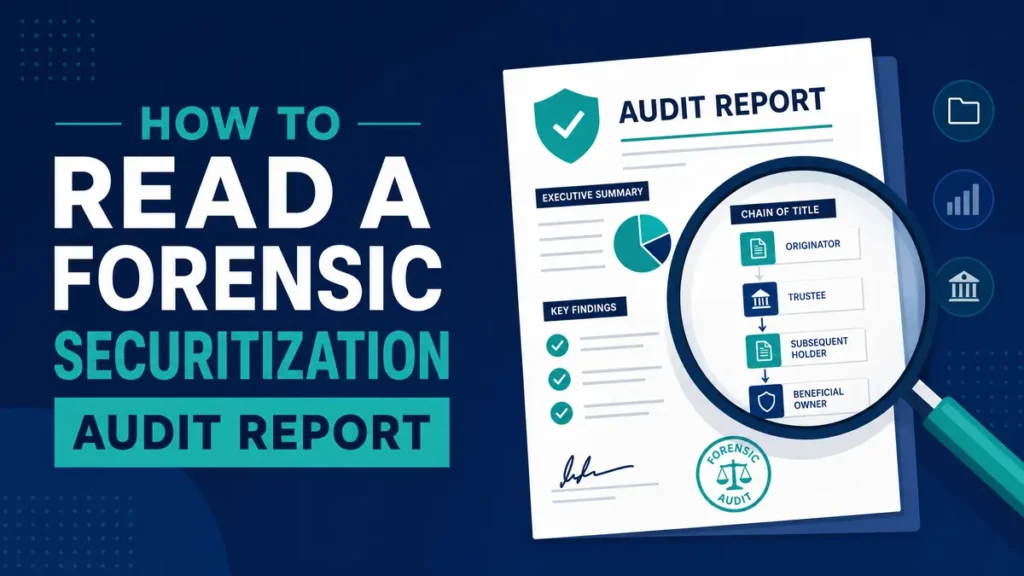
When you receive a forensic securitization audit report, you are looking at a legal document, not a financial summary. Understanding how to read it, and what the findings actually mean, is important whether you are reviewing it yourself or handing it to an attorney.
The Executive Summary
Every SDAudit report begins with an executive summary. This section is written for a non-technical reader and provides a plain-language description of the key findings. If there are significant defects, they are identified here with a brief explanation of their legal significance.
The executive summary is often the first thing an attorney reads. It tells them immediately whether the report contains findings worth pursuing and what the strongest arguments are.
The Securitization Structure Section
This section identifies the trust, the depositor, the sponsor, the servicer, and the trustee. It includes the trust name, the SEC EDGAR filing reference, the PSA cutoff date, and the closing date. This is the foundation of the audit. Everything else in the report is measured against this structure.
Chain of Title Timeline
The chain of title section traces every recorded transfer of your loan, from the original lender through every intermediate entity to the trust. Each transfer is listed with the date it was executed, the date it was recorded, and whether it complied with the PSA requirements.
Defects in the chain are highlighted and numbered. A gap, a late recording, or a missing intermediate transfer is flagged as a specific finding with a citation to the applicable PSA provision or legal standard.
UCC and Perfection Analysis
For auto loans and personal loans, this section analyzes the UCC financing statements filed in connection with the loan. It verifies whether the security interest was properly attached, perfected, and maintained through each transfer. A lapse in perfection, even a brief one, can affect the enforceability of the lien.
PSA Compliance Findings
This is often the most detailed section of the report. It compares the actual documented transfers against the specific requirements of the governing PSA. Each violation is cited with the relevant PSA section, the date of the violation, and an explanation of its legal significance.
Standing and Enforcement Analysis
The final analytical section addresses the bottom line: does the entity claiming to own your loan have the legal standing to enforce it? This section synthesizes all the findings from the previous sections and draws a documented conclusion about the claimant's enforcement authority.
Exhibits
The exhibits section contains the supporting documentation for every finding in the report. This includes copies of recorded assignments, excerpts from the PSA, SEC EDGAR filing references, and any other documents that support the findings. In Elite package reports, this section also includes the signed Expert Witness Affidavit.
How to Use the Report
Hand it to your attorney. The report is structured to be immediately usable in arbitration or litigation. The findings are numbered, the citations are specific, and the exhibits are organized. An attorney familiar with securitization issues can begin building a strategy around the findings without needing to conduct additional research.
If you do not yet have an attorney, the executive summary is a useful starting point for conversations with potential counsel. Most attorneys who work in this area will recognize the significance of a documented PSA cutoff violation or a broken chain of title immediately.
Ready to get your audit? View our packages here.
If you have received a forensic securitization audit report and need help understanding what it means for your case, SDAudit can help. Our team reviews loan documents and audit reports for San Diego homeowners. Visit our loan audit services page to see what we offer, or contact us for a free consultation.