Most people have never heard the term “securitization audit” until they are already in a dispute with their lender. That is a problem, because understanding what securitization is, and what an audit actually does, is the first step toward knowing whether you have any leverage in your situation.
What Is Securitization?
When you take out a mortgage, auto loan, or personal loan, the lender rarely holds onto it for the life of the loan. Within weeks of origination, many loans are sold to a depositor, who packages them with thousands of other loans and transfers the entire pool into a securitization trust. That trust issues certificates to investors, who receive payments based on the cash flow from the underlying loans.
The trust is a separate legal entity. It has a governing document called a Pooling and Servicing Agreement, or PSA. The PSA sets out the rules for how loans must be transferred into the trust, including deadlines, documentation requirements, and the chain of entities that must be involved in each transfer. If any transfer fails to follow the PSA, the trust may not have clear legal title to the loan.
Why Securitization Matters for Borrowers
Securitization affects who has the legal right to collect payments or to begin foreclosure or repossession. If a lender or servicer cannot prove it actually owns the loan or is authorized under the PSA, the borrower has a potential defense in court or in negotiations. That is where a securitization audit comes in.
What Is a Securitization Audit?
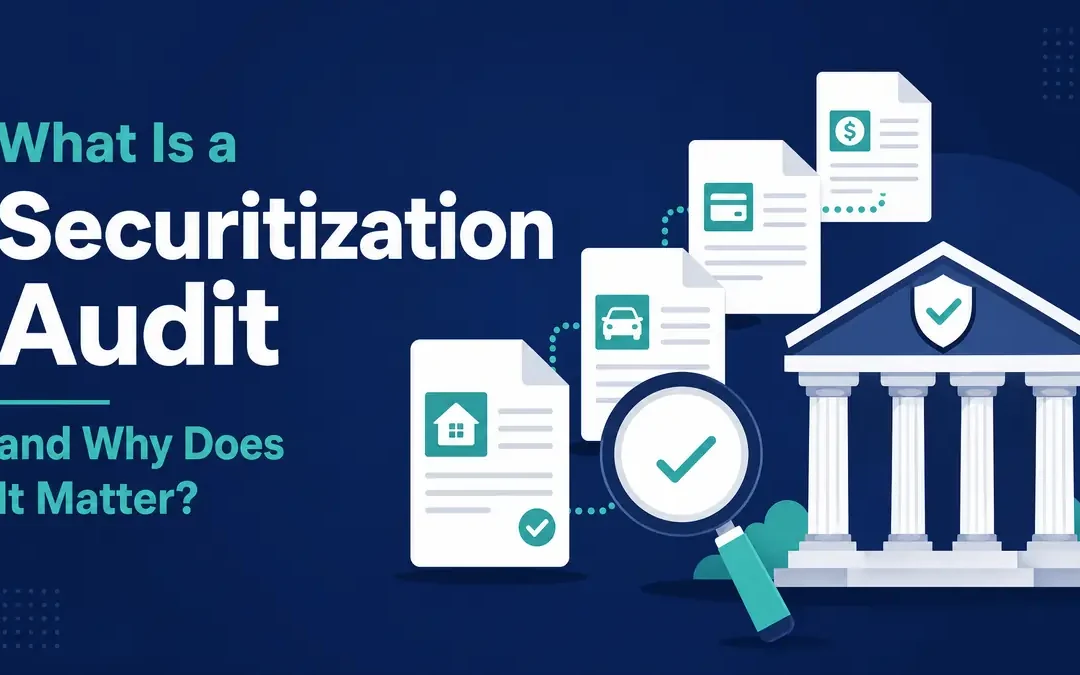
A securitization audit is a forensic review that traces the chain of ownership from the original lender through every assignment, endorsement, and transfer into the trust. The audit compares what actually happened to what the PSA and applicable law require. The goal is to find substantive defects that affect ownership, or the authority to enforce the loan.
How a forensic audit differs from a generic audit
Generic audits often focus on calculation errors or missing payments. A forensic securitization audit builds a legal narrative. It documents assignments, recording dates, endorsements on the promissory note, and any deviations from the PSA. The output is written evidence your attorney can use to challenge standing, support arbitration, or negotiate a settlement.
What Defects Does a Securitization Audit Look For?
- Broken chain of title: Gaps in recorded assignments or missing documents that prevent proof of ownership.
- Late assignments and PSA cutoff violations: Many PSAs require loans to be transferred by a specific cutoff date. An assignment recorded after that date may be ineffective under the PSA.
- Missing or defective endorsements: The promissory note typically must be endorsed at each transfer. A missing endorsement can break the chain.
- Robo-signing and false attestations: Assignments or affidavits signed by individuals who lacked knowledge or authority can be void or fraudulent.
- UCC perfection failures: For auto and some personal loans, the secured party must properly perfect the security interest. Failure to file or maintain UCC-1 financing statements can affect enforceability.
Practical example
Imagine a PSA requires loans to be transferred into the trust within 90 days of origination. Your mortgage was originated January 1, but the recorded assignment showing transfer into the trust is dated May 15. If the PSA cutoff is strictly enforced, the assignment may be invalid under the PSA. A securitization audit documents those dates, the recording timeline, and any endorsements missing from the original note.
How Audits Are Used in Practice
A well-documented audit gives attorneys factual and documentary support to challenge a lender’s claim of ownership. Typical uses include:
- Challenging standing in foreclosure or repossession proceedings.
- Supporting arbitration or litigation defenses.
- Strengthening settlement negotiations by showing concrete defects.
- Guiding discovery requests that force lenders to produce the missing documents.
It is important to be realistic. Not every defect leads to dismissal or debt discharge. Some defects can be cured by later assignments or by the lender producing missing documents. The value of an audit is that it identifies the specific weaknesses in a claimant’s chain of title.
How a Securitization Audit Is Performed – Step by Step
- Initial intake: Collect basic loan information – loan number, origination date, lender name, county recorder links, copies of the note, deed of trust, HUD-1 or closing statement, payment history, and any notices received.
- Document retrieval: Pull recorded assignments, endorsements, county records, MERS records, servicing records, and trust documents such as the PSA and trust agreement.
- Chain tracing: Map every transfer and endorsement chronologically to reveal gaps, late filings, or inconsistent parties.
- Legal comparison: Compare each step to PSA requirements and applicable state law, noting any deviations that create legal defects.
- Report and exhibits: Produce a written audit report with exhibits, timelines, and red flags that your attorney can use.
What documents you should gather before ordering an audit
- Copy of the original promissory note and deed of trust
- Closing statement or HUD-1
- All notices from the lender or servicer
- Any recorded assignments or affidavits you have
- Payment history and escrow records
Who Should Order a Securitization Audit?
Anyone with a securitized loan who is facing a dispute, default, foreclosure, repossession, or who simply wants to confirm the legal ownership of their debt should consider an audit. If your loan was originated after 2000, there is a strong probability it was securitized. Whether that securitization was done correctly is a separate question worth asking.
What to Expect When Working with SDAudit
SDAudit performs detailed, forensically focused audits tailored to each case. We retrieve public records, analyze trust documents and PSAs, trace endorsements, and deliver a clear report with timelines and exhibits. Our reports are written to be useful to attorneys, mediators, or consumers who want to make informed decisions.
Cost and turnaround depend on the loan type and complexity. You can view our audit packages to see which level of forensic analysis fits your situation. For many clients the audit pays for itself by producing leverage in negotiations or by avoiding unnecessary litigation.
Next Steps and Practical Advice
If you are in active collections or facing foreclosure, do not wait. Preserve all loan documents and any communications from the lender or servicer. Reach out to an experienced attorney and consider ordering a securitization audit as soon as possible. Early documentation can reveal defects before the lender has a chance to cure them.
If you want help understanding whether an audit is right for you, learn more about our loan audit services or reach out for a free consultation. SDAudit serves clients in San Diego and beyond. Contact us today for a free consultation or to get started on a securitization audit that could change the course of your dispute.