
Homeowner Education
Mortgage Loan Audit Guide: Fees, Errors and Credit
A plain-English guide to evaluating mortgage loan documents: what a review checks, how lender audits differ from borrower audits, and how to read the findings.
What the Review Is
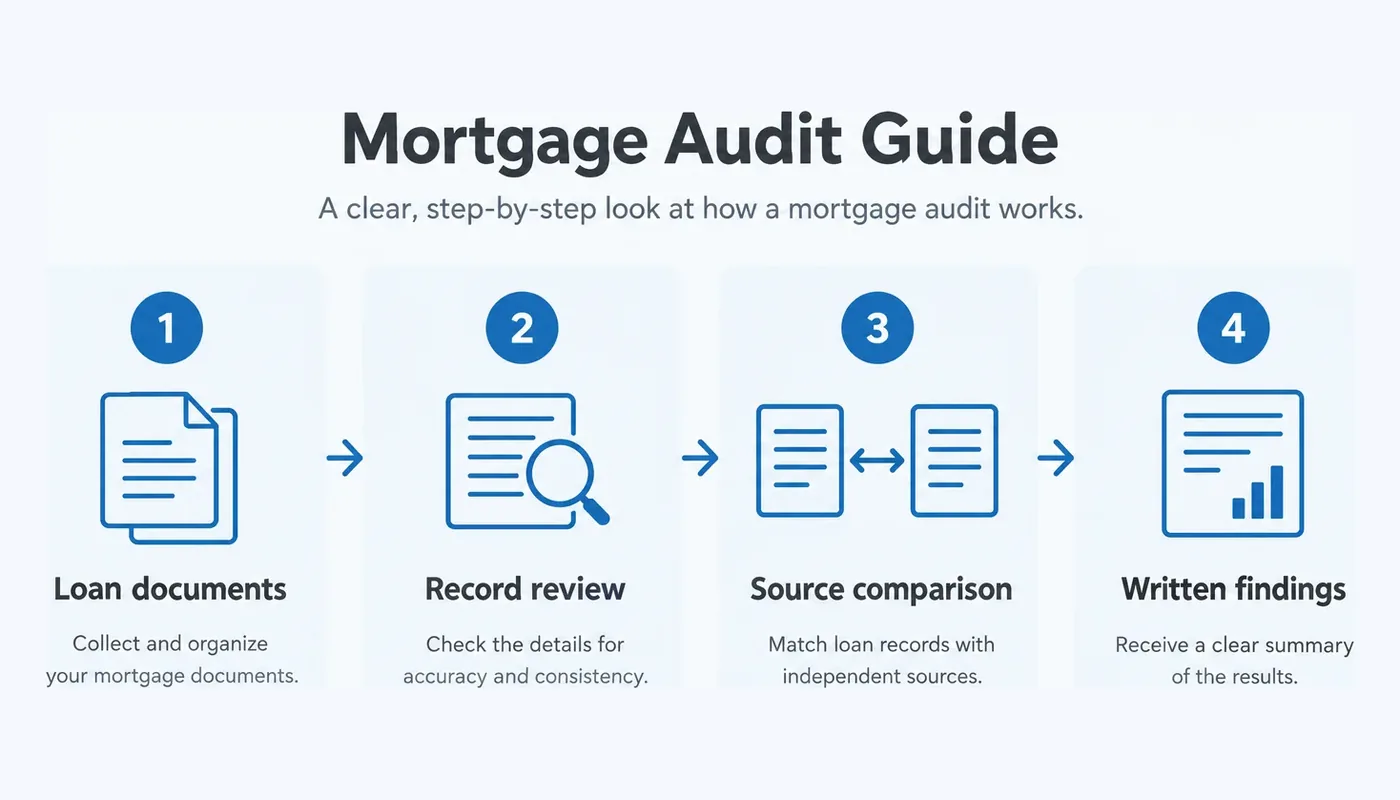
A mortgage audit is an independent, page-by-page review of the records behind a home mortgage. It compares what you signed with what you were told, what you have paid with what the servicer has recorded, and what the public record shows about who holds the mortgage today. The goal is simple: find out whether the numbers and the paperwork agree.
Most homeowners never look at their mortgage file again after signing. That is understandable; the stack is thick and the language is technical. But mortgages are long contracts, they change hands often, and small errors compound over years of payments. A careful review is the only way to know whether your mortgage reflects the deal you agreed to.
The phrase is used for two different things, and search results mix them together. Lenders run audits of their own files, and borrowers order audits of their own mortgage. They share some methods but answer very different questions.
Audits Lenders Run on Themselves
If you have been told your mortgage was selected for a post-closing audit, this section is for you. Mortgage lenders are required to run quality-control reviews on a sample of the loans they close. Random mortgage audits involve examining the income, employment, asset and credit information in the file and re-verifying it with the original sources, sometimes months later.
Can a lender audit a mortgage after it closes? Yes, they can. Fannie Mae, Freddie Mac, FHA and VA all require mortgage lenders to maintain a quality-control program, and internal audits are a routine part of that practice. A request for updated pay stubs, a re-pulled credit report or a letter explaining gifted funds does not mean anything is wrong. In most cases it is a box-checking exercise. Where there are concerns that information was misstated, the lender may refer the file for a fraud review, which is far more serious.
Separately, states perform examinations of licensed mortgage lenders and brokers to check compliance with state lending laws. Those are regulatory audits of the company, not of your individual mortgage.
Strategic Defense Audit does not perform lender quality-control or compliance work. We work only for homeowners and borrowers. If you need help responding to a lender’s post-closing request, answer it promptly and accurately, and speak with a real estate lawyer if anything in the request concerns you.
What a Borrower Review Checks
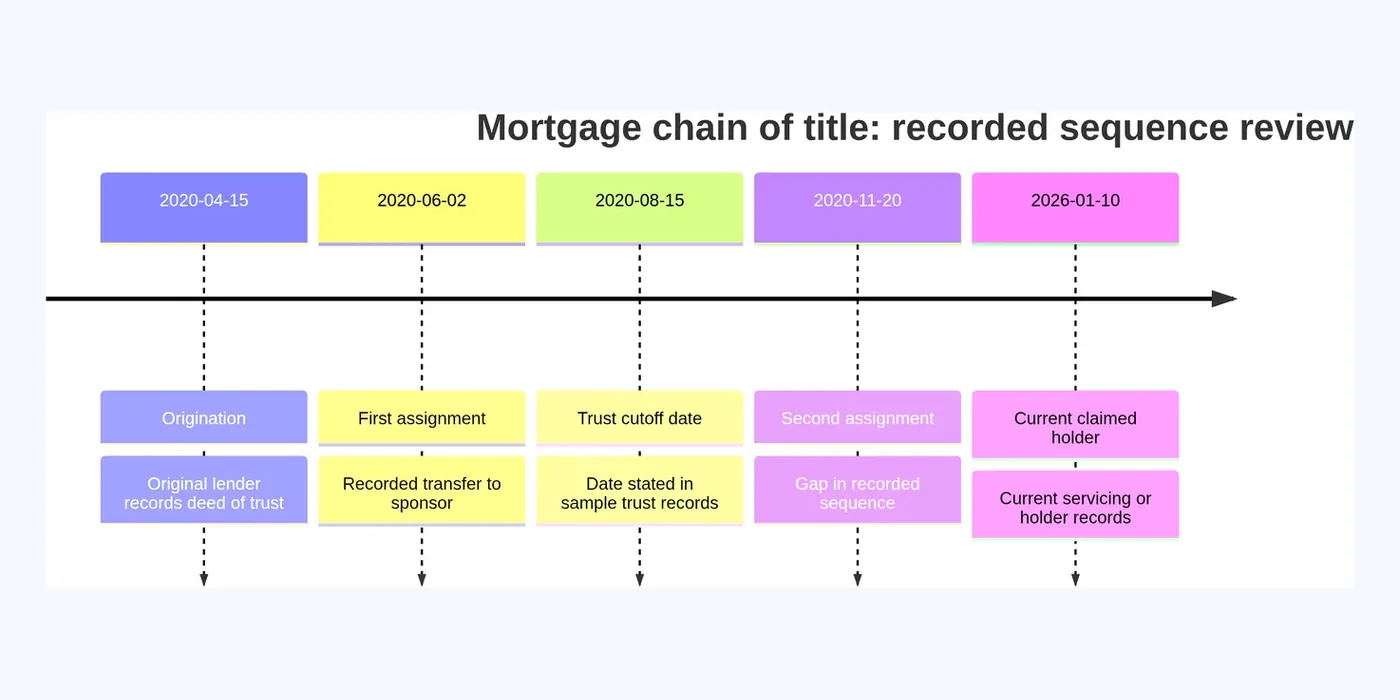
A borrower-side review looks at three stages in the life of a mortgage. Each one has its own records and its own rules.
Origination. The application, the Loan Estimate, the Closing Disclosure, the promissory note and the deed of trust. We reconcile the figures across these records and compare them with the disclosure rules in Regulation Z. This is where APR errors, undisclosed fees and term changes between the estimate and the final numbers usually appear.
Servicing. The payment history, escrow analyses, late-fee and corporate-advance entries, and any servicing transfer notices. We rebuild the account from the servicer’s own data and look for misapplied payments, fees without a documented basis, escrow shortages that do not reconcile, and force-placed insurance. The servicing rules sit in Regulation X.
Transfer. Recorded assignments, note endorsements, MERS registration and, for securitized mortgages, the trust’s filings with the SEC. We put every documented transfer in date order and flag gaps or inconsistencies. For a deeper review of this stage, see our forensic mortgage audit and securitization review pages.
Throughout, we also check how the account has been reported to the credit bureaus. A payment that was received on time but posted late can show up as a delinquency on your credit report, and the CFPB explains how to dispute credit errors.
Common Findings
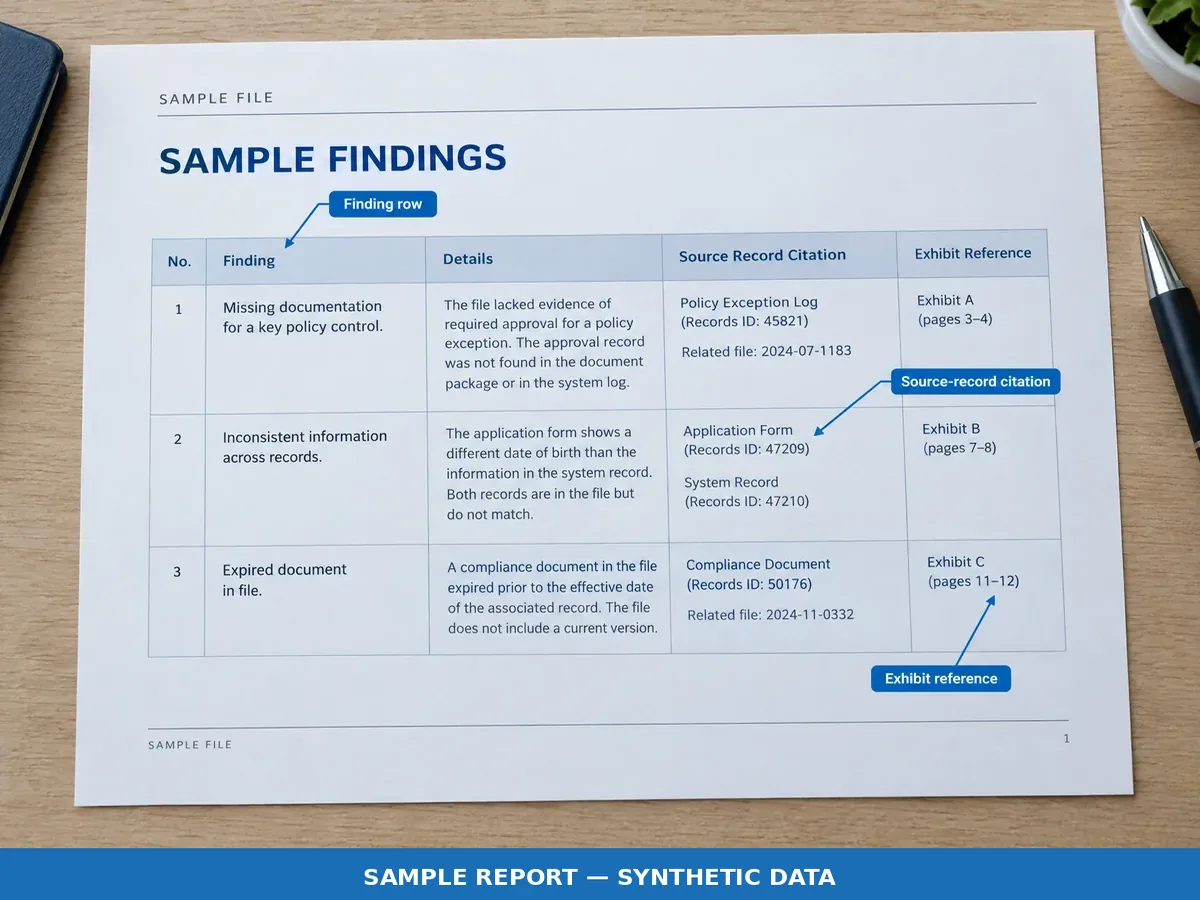
Whether any of these appear in your file depends entirely on your records. These are the categories that come up most often in the mortgage audits we perform:
- Fees on the Closing Disclosure that were not on the Loan Estimate, or that exceeded the allowed tolerance.
- An APR or finance charge that does not match the rate, term and fees actually charged.
- Payments applied to fees or escrow before principal and interest, or posted after their due date.
- Escrow shortages driven by an incorrect tax or insurance figure.
- Late fees or inspection charges assessed while a payment was in transit or a loss-mitigation application was pending.
- Assignments recorded out of sequence, or endorsements on the note that do not match the recorded chain.
Some files show a pattern rather than a single error, such as a series of refinances that each added costs to the balance, or a mortgage that was clearly unaffordable on the income shown in the application. Those patterns can matter, but they are questions for a qualified attorney, not conclusions a records review can draw. We document what the papers show and leave the legal analysis to counsel.
Signs Worth a Closer Look
Not every mortgage needs a review. These are the situations where homeowners most often find that one is worthwhile:
Your mortgage statement shows a balance higher than your own records suggest, or the principal has barely moved despite years of payments. Your escrow payment jumped and the servicer’s explanation does not match your tax bill or insurance declarations. Your mortgage was transferred to a new servicer and payments went missing or were applied late in the changeover. You received a notice of default or a foreclosure letter from a company you have never heard of. Or you were denied a modification and the servicer’s figures do not match yours.
Each of these has a records trail, and each can be checked. In many cases the explanation turns out to be ordinary: a tax reassessment, an insurance renewal or a misunderstanding about how a mortgage amortizes. In others, the mortgage history shows a real discrepancy that can be raised with the servicer through a written notice of error under Regulation X. Either way, you replace guesswork with facts.
Timing matters too. If a foreclosure sale date has been set, talk to a licensed attorney first. A review can support that conversation, but legal deadlines run on their own clock, and the legal options available to you depend on your state and on how far the process has gone. A mortgage review is most useful early, before decisions are made, and it is just as useful when you are current and want to confirm your mortgage is accurate before a refinance or sale.
How the Process Works
Free consultation first. You speak with Daniel Guillemot, our client representative, who will be your point of contact from the first call through delivery of your report. You tell him what you are facing and he tells you honestly whether a review is likely to help. We take calls seven days a week, 9am to 6pm Pacific, and we help each client personally.
Next, you send what you have: the settlement package, the note and deed of trust, recent statements, any servicing transfer letters and any correspondence with your lender. If records are missing, we explain how to request them from the servicer. Our document checklist lists everything to gather.
We then pull the public records ourselves: county recordings, MERS registration and, where the mortgage was securitized, the trust’s SEC filings. Every figure is reconciled and every transfer placed in order.
You receive a written report that identifies the documents reviewed, lists each finding with its source, notes what was unavailable, and explains the results in plain English. If the file is clean, the report says so. A clean result is useful too, and we never manufacture issues.
Current packages, turnaround times and costs are listed on the pricing page. Most homeowners want to know the cost before anything else, and every package is a published flat rate.
What It Cannot Do
Being clear about the limits is part of doing this honestly. A review produces information. It does not stop a foreclosure, cancel a mortgage, reduce what you owe or guarantee a modification, and we are not lawyers. Any company that promises those outcomes in exchange for an up-front fee is describing a practice the Federal Trade Commission warns homeowners about.
What a good review does is give you, and any attorney you work with, an organized and sourced picture of your own mortgage. Many lawyers bill by the hour, and a large share of early hours goes into gathering records. Arriving with the file already assembled usually makes that conversation shorter and more productive. If you need a lawyer, your state bar’s referral service is a good starting point, and directories such as Avvo list real estate and consumer lawyers by area.
Questions Homeowners Ask
Do I need to be behind on payments? No. Many clients are current and simply want to know their mortgage is accurate, especially before a refinance or sale.
How far back can the review go? As far as the records exist. Recorded documents and SEC filings are permanent; servicing histories depend on what each servicer passed along, which is sometimes a finding in itself.
Will my lender know? Not unless you tell them. The review uses records you already have or are entitled to request.
What about loans other than mortgages? We also review auto loans, private student loans and credit card accounts. See the auto loan audit guide or the full service overview.
Get a Clear Answer About Your File
Call 888-450-4221 for a free consultation, 9am to 6pm Pacific, seven days a week. We will look at what you are facing and tell you plainly whether a review makes sense.
Related reading: how to get a free mortgage audit, how SDAudit compares with mortgage audits online, the best mortgage audit services of 2026, what to do if you find errors in your documents, audits and the foreclosure timeline and whether a securitization audit is worth it.
This guide is provided for general information. Strategic Defense Audit provides document analysis, not legal advice or representation.
Keep Reading
If your own review turns up questions you cannot answer, a forensic mortgage audit checks your assignments, recordings and servicing history against the documents behind them.