Secure Defense Audit Services
Loan Audit Services
Secure Defense Audit provides nationwide document and securitization reviews for borrowers who want a clearer view of the records connected to their loan. Depending on the review selected and the records available, that may include origination documents, payment histories, assignments, servicing records, and related public filings.
Loan Audit Services by Loan Type
Different loan types involve different records. Start with the section closest to your situation. Each service page explains the records commonly reviewed and the questions that may be worth documenting.
Mortgage Document Review
A mortgage review can bring together closing documents, payment history, escrow records, recorded assignments, servicing correspondence, and other available records. It is designed to help you understand the document trail connected to a mortgage.
Learn about mortgage audit services or read the mortgage audit guide.
Auto Loan Document Review
An auto-loan review can examine the retail installment sales contract, account statements, payment history, add-on charges, and available assignment or title records. The purpose is to organize the available paperwork and identify questions that may need further review.
Student Loan Record Review
Student-loan questions can depend on whether the loan is federal or private, the account history, promissory note, servicing notices, and payment records. A review can help organize the documents available for a closer look.
Credit Card and Personal Loan Record Review
For credit-card accounts and personal loans, the available record may include account agreements, billing statements, collection correspondence, payment history, and assignment documents. The review focuses on the documents that are available for the account.
Why Anyone Orders a Loan Audit
Most people arrive here for one of four reasons. It is worth naming them, because the right review depends on which one you are.
- You cannot get a straight answer about who owns your loan. The servicer says one thing, a letter says another, and the county record says a third. A transfer-focused review assembles all three and shows you where they diverge.
- Your payment history does not reconcile. You believe you have paid more than the balance reflects, or fees have appeared without explanation. A servicing review rebuilds the account from the servicer’s own records.
- You are about to hire an attorney. Attorneys bill hourly, and a large share of early hours goes to gathering and organizing documents. Arriving with the file already assembled and indexed is often cheaper than paying someone to do it at their rate.
- You simply want to know. No dispute, no deadline — you want to understand what is in your own file. That is a legitimate reason and a common one.
If none of those describes you, an audit may not be what you need, and we would rather say so.
What a Loan Audit May Cover
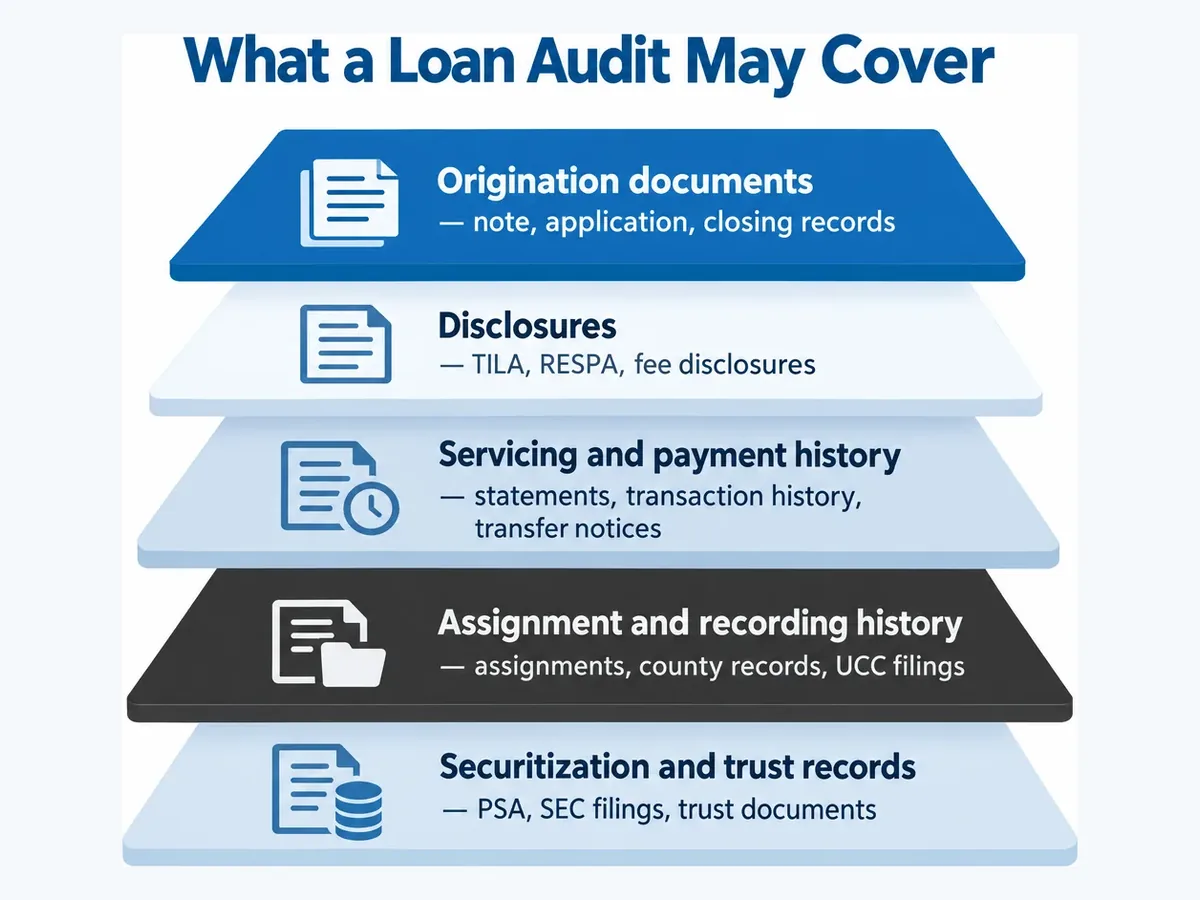
The scope of a review depends on the service selected and the records available. Secure Defense Audit may organize and document questions related to:
- The available chronology of loan origination, servicing, transfers, or collection activity.
- Loan documents, account statements, payment histories, and correspondence supplied for review.
- Recorded assignments, endorsements, trust documents, or related public filings where they are relevant and available.
- Questions about payment application, fees, interest calculations, notices, or other items shown in the records reviewed.
- Missing, inconsistent, or incomplete records that may warrant additional document collection or discussion with a qualified professional.
A documented question or inconsistency is not a legal conclusion and does not determine the outcome of a dispute. The value of a review is a clearer, more organized record for your own understanding and for any qualified professional you choose to consult.
When Securitization Records Are Relevant
Some loans have a history that includes transfers, servicing changes, or trust-related records. Where those records are relevant and available, Secure Defense Audit can organize the document trail so the sequence is easier to understand. This may include reviewing recorded documents, available transfer records, and trust-related materials.
For a focused explanation of this type of review, see securitization audit services.
How the Review Process Works
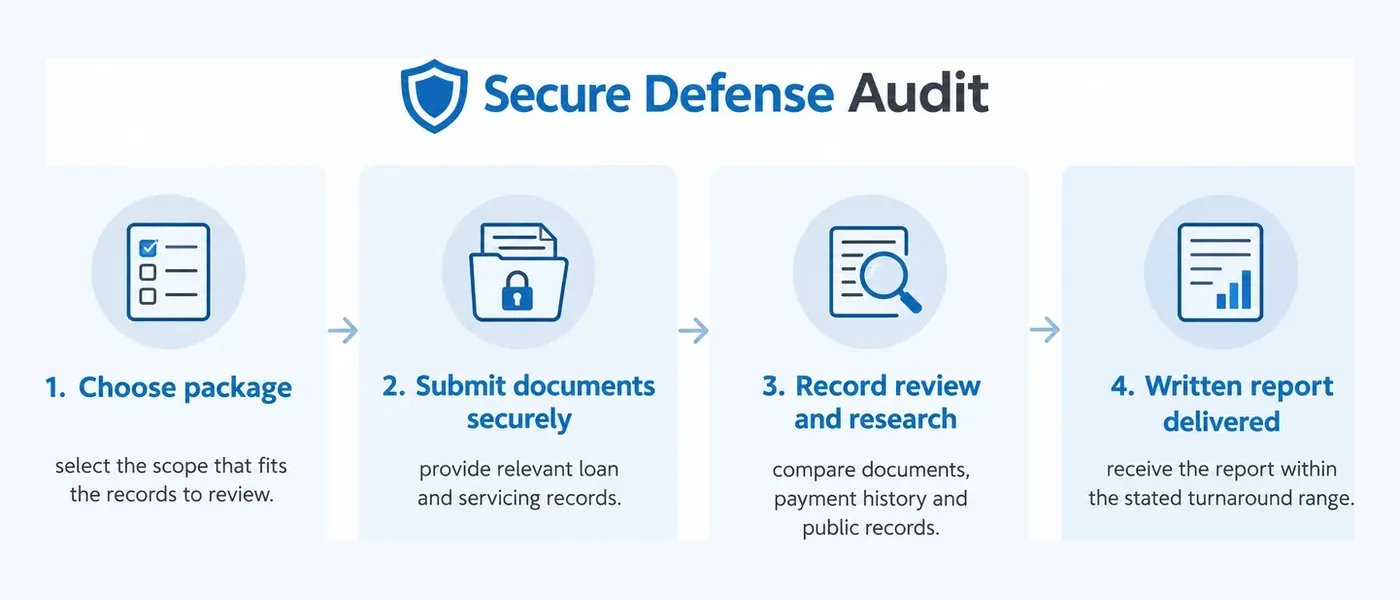
Gather the documents that relate to the loan or account. A complete set is helpful, but you can begin by identifying what is available.
Select the loan type and available service information that best match the documents and questions involved.
The review brings the relevant documents, dates, statements, and other available information into a structured record for analysis.
The resulting materials identify the documents examined, the records located, and the questions or inconsistencies identified in the review.
Your report is intended to help you understand the records reviewed and prepare for your next conversation. It does not replace advice from a licensed attorney or other qualified professional.
Documents That Can Be Useful to Gather
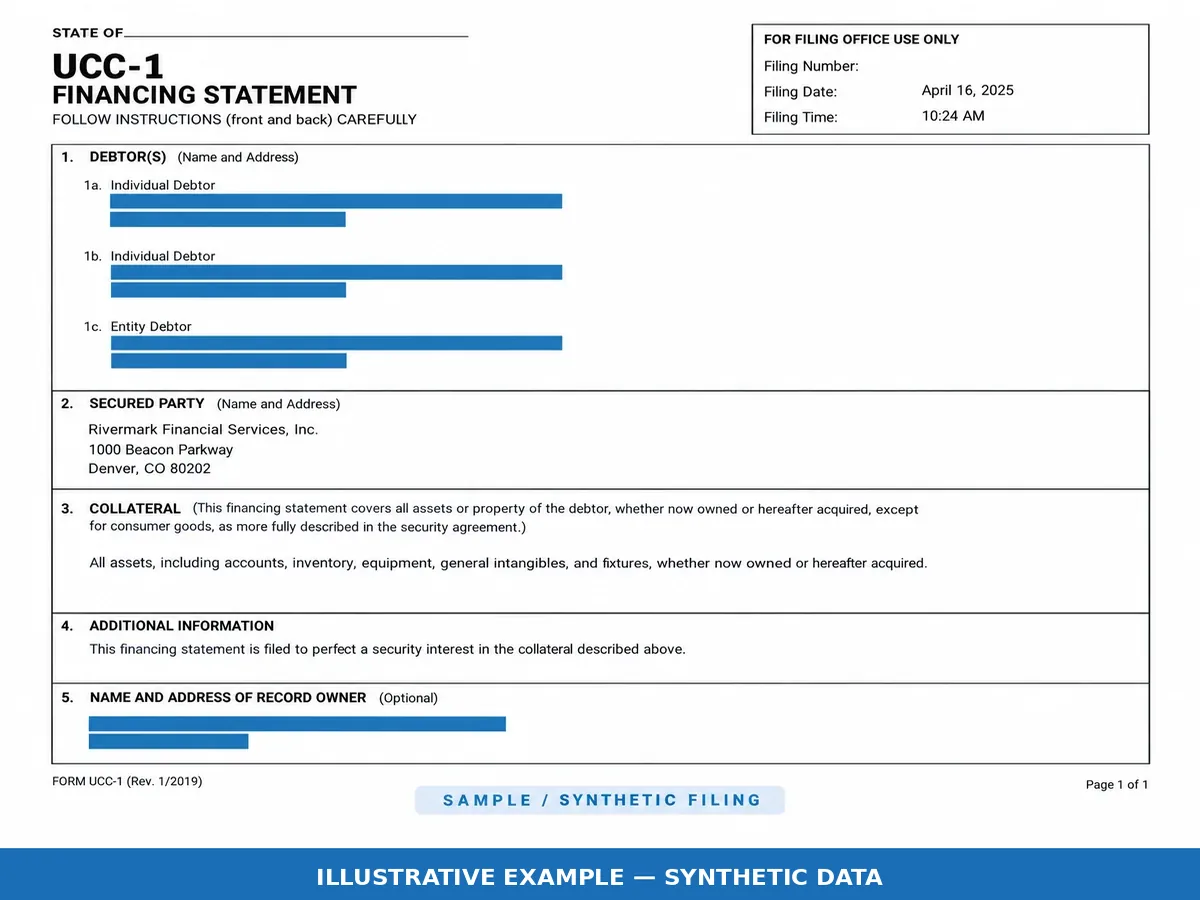
The records vary by loan type. The following documents are often useful if they are available:
- Loan agreement, promissory note, retail installment contract, or account agreement.
- Closing disclosure, HUD-1, or other origination disclosures, where applicable.
- Monthly statements, payment records, escrow records, and payoff figures.
- Notices, letters, emails, and other communications from the lender, servicer, collector, or trustee.
- Recorded assignments, deeds of trust, mortgages, or other public records, where applicable.
- Any timeline you have created that explains when payments, transfers, notices, or disputes occurred.
Use the loan audit document checklist to organize the records you have before selecting a package or contacting Secure Defense Audit.
What a Review Cannot Establish
Being clear about the limits is part of doing this honestly. A document review, from us or anyone, cannot:
- Tell you whether you have a legal claim. That is a legal conclusion requiring a licensed attorney who knows your state’s law and your full circumstances.
- Stop a foreclosure. An audit is information. It does not file anything, halt anything, or bind anyone.
- Eliminate, reduce, or modify a debt. No document review changes what you owe.
- Prove intent. We can document that a record is missing or that two dates do not match. Why that happened, and whether anyone meant it to, is beyond what paperwork shows.
- Recover records that do not exist. Where a servicer never received a document from a prior servicer, we report the gap. We cannot manufacture what was never created.
Any firm telling you otherwise is describing something the Federal Trade Commission has specifically warned consumers about.
What the Reviews Cost and How Long They Take
Every package is a published flat rate. Nothing is quoted differently by phone, and there are no advance fees for mortgage assistance relief — because we do not sell mortgage assistance relief.
- Contract review — $399, three to five business days. Origination documents and disclosures, with registration checks.
- Securitization audit, non-mortgage — $699, three to five business days. Adds trust identification, CUSIP and tranche work, PSA review, and UCC filing analysis.
- Securitization audit, mortgage — $899, five to nine business days. Adds MERS and county recording gap analysis, deed of trust review, and REMIC cutoff verification.
- Legal-grade packet, non-mortgage — $1,199, five to seven business days. Adds exhibits, an examiner declaration, and statutory citation analysis.
- Legal-grade packet, mortgage — $1,399, seven to ten business days. Full packet with notarized examiner affidavit and complete PSA compliance analysis.
Full scope for each tier, side by side, is on the pricing page. If a deadline makes the turnaround unworkable, tell us when you call and we will say so rather than take the order.
Review Available Audit Packages
Compare the available package information and select the option that fits the loan records you want reviewed.
View Audit PackagesQuestions about the available audit packages? Call 888-450-4221.
If you need help deciding where to begin, visit the Secure Defense Audit contact page.
Important: Secure Defense Audit provides document and securitization analysis for general informational purposes. Secure Defense Audit does not provide legal advice or legal representation. The information on this page is not a promise of outcome and is not a substitute for advice from a licensed attorney or other qualified professional.
Things Borrowers Commonly Get Wrong About This
“If the audit finds a problem, the debt goes away.”
It does not. A documented gap in a transfer record is a fact about paperwork. What it is worth, if anything, depends on your jurisdiction, your procedural posture, and an attorney’s judgment. Firms that have implied otherwise are the reason this industry has a bad reputation.
“My servicer owns my loan.”
Usually not. The servicer is the company that bills you and takes your payments. On a securitized loan the owner is typically a trust, with the servicer performing a contracted function. This surprises most borrowers.
“A free review from my lender is the same thing.”
A review conducted by the party whose records are in question is not an independent review. That is not an accusation — it is just what the words mean.
“All loan audits are scams.”
Some have been, and enforcement actions exist to prove it. The distinction is what is being sold. A flat-rate document review delivered on a stated timeline, with every finding tied to a source you can check, is a defined service. A promise about an outcome is not.
“I need to be in trouble to order one.”
No. Some clients order a review while entirely current, because they want the record before they need it.
Common Questions
Do you work in every state?
Yes. The primary records — SEC filings, MERS, county recordings — are accessible nationwide.
What if I do not have my closing documents?
Start with a written request to your servicer. For mortgages, Regulation X provides the Request for Information process. Our checklist covers what to ask for.
Is my information kept confidential?
Loan documents and findings are treated as confidential and handled through a secure intake and delivery process.
Do you offer refunds?
Ask before you order and we will tell you plainly what our terms are. We would rather have that conversation up front than after.
Will you talk to my attorney?
Yes, and it usually makes the review better. If counsel has specific questions about the file, tell us at intake so the review addresses them.
Sources We Work From
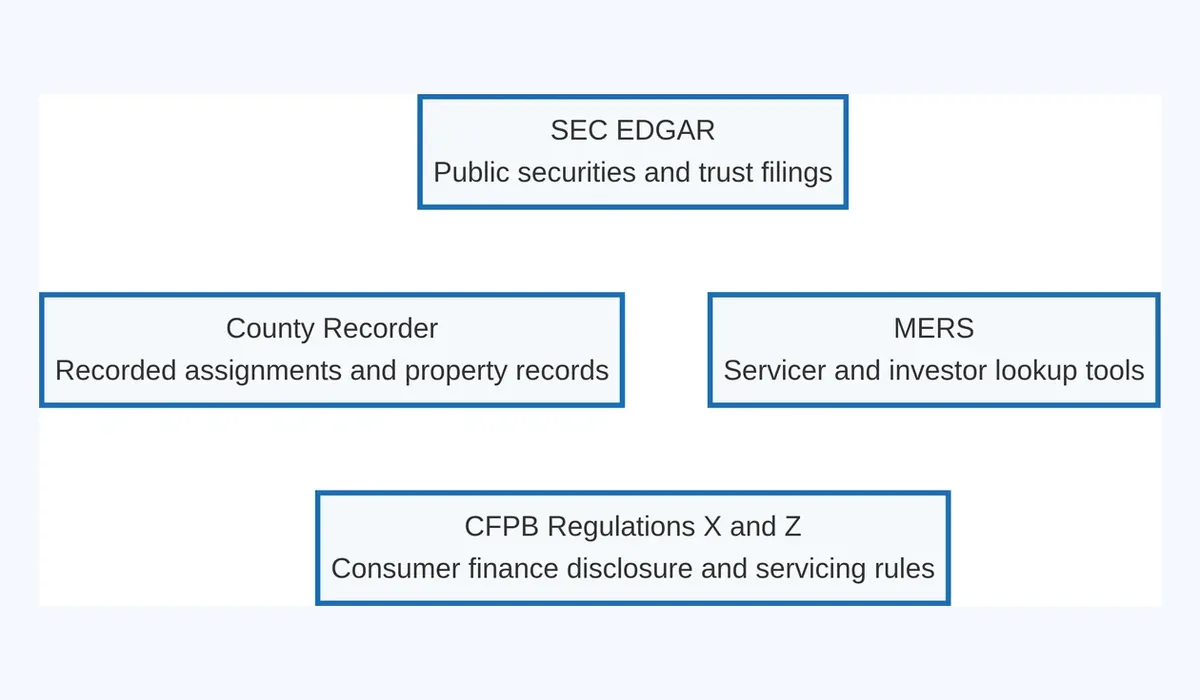
Every finding in an SDAudit report is tied to a record you can look up yourself. Trust identity, cutoff dates and pooling and servicing agreements come from the SEC’s EDGAR filing database. Assignment and recording history comes from county recorder records and the publicly searchable MERS Servicer ID lookup. Servicing, disclosure and dispute obligations are set out in Regulation X and Regulation Z, and perfection of security interests is governed by UCC Article 9.
Before You Hire Anyone
Loan auditing is a field with a real history of bad actors. The Federal Trade Commission has warned consumers about firms that sell forensic loan audits as a guaranteed route out of foreclosure, and the Consumer Financial Protection Bureau has brought enforcement actions against companies that did so while charging illegal advance fees. Read both before you pay anyone in this industry, including us.
What we sell: a document review at a published flat rate, delivered on a stated timeline, with each finding tied to its source record. What we do not sell: legal advice, legal representation, foreclosure relief, loan modification, or any promise about the outcome of a dispute. Those conversations belong with a licensed attorney in your state.