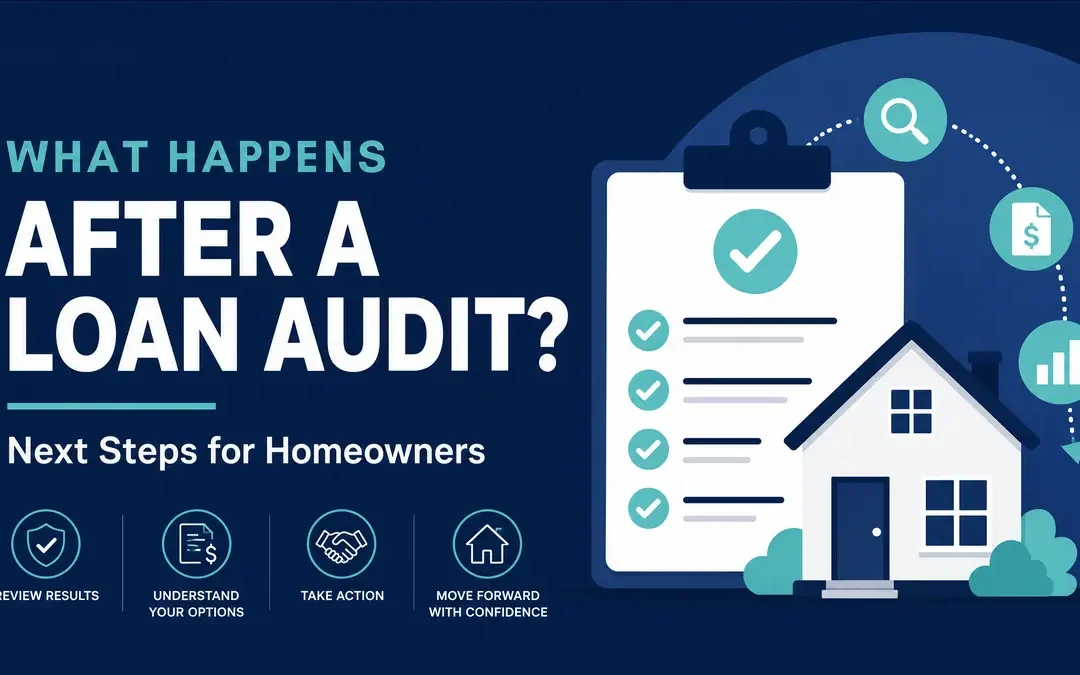
What Happens After a Loan Audit? Next Steps for Homeowners
If you’ve asked “what happens after loan audit?” you’re not alone. A loan audit can uncover underwriting errors, servicing mistakes, improper fees, or evidence of predatory practices. Knowing the likely outcomes and the proper next steps helps homeowners protect their rights, recover money, or negotiate better loan terms. This guide explains what typically happens after a loan audit, with practical steps tailored to homeowners in California and references to state-specific protections and enforcement options.
Immediate Outcomes of a Loan Audit
After a professional loan audit, you will receive a detailed report outlining findings, supporting evidence, and recommended actions. The report typically categorizes issues by severity and impact on your loan balance, payment history, or foreclosure status.
Common audit findings
- Servicing errors (misapplied payments, incorrect escrow accounting)
- Improper fees or charges (unauthorized late fees, force-placed insurance)
- Loan origination problems (missing disclosures, inaccurate loan terms)
- Mishandled modifications or foreclosure procedures (dual tracking, failed notice requirements)
- Calculation errors (misstated interest, misapplied principal)
Possible immediate consequences
- Lender acknowledgment and correction (adjusting account, refunding fees)
- Initiation of a dispute process with the servicer
- Referral to legal counsel if violations are serious
- Regulatory complaint submission to DFPI or CFPB
- No action if findings are minimal or inconclusive
Steps You Should Take Right After the Audit
Knowing what to do after a loan audit increases the chance of a favorable outcome. Follow these immediate steps:
1. Review the audit report carefully
Read the report line-by-line. Pay attention to dates, calculations, and documentation cited. Make note of anything you disagree with or do not understand. Keep a file with the audit report and all backup documents used in the audit.
2. Gather and preserve documentation
- Original loan documents and closing disclosures
- Payment records, cancelled checks, and bank statements
- Escrow statements and insurance invoices
- All correspondence with the lender or servicer
- Loan modification applications and approvals/denials
3. Initiate a dispute with the servicer
In California, and federally under RESPA, borrowers have the right to submit a qualified written request (QWR) to their loan servicer to dispute errors and request information. Even if the servicer does not formally label it a QWR, send a clear, documented demand that references the audit findings and requests corrective action within a reasonable timeframe.
Dealing with the Lender or Servicer
Negotiation and account corrections
Many lenders will respond by correcting accounting errors, issuing refunds for improper charges, or adjusting loan terms. Corrections should be documented in writing and reflect in your next billing statement. Keep an eye on escrow disbursements and interest calculations after any adjustment.
Loan modifications and alternatives
If the audit reveals the loan was mispriced or the borrower was improperly denied loss-mitigation, you may be able to reopen a modification application, negotiate principal forbearance, or obtain a loan modification with more favorable terms. California homeowners can also explore state foreclosure prevention programs and loan modification mediation programs offered by some counties.
When the servicer refuses to act
If a lender declines to correct clear errors, escalate the matter:
- File a formal complaint with the Consumer Financial Protection Bureau (CFPB)
- Submit a complaint to the California Department of Financial Protection and Innovation (DFPI) for institutions it regulates
- Consult an attorney to evaluate civil remedies, including claims under the California Homeowner Bill of Rights (HBOR) if applicable
Legal and Regulatory Options in California
California offers several protections and enforcement channels that can be relevant after a loan audit.
California Homeowner Bill of Rights (HBOR)
The HBOR (effective 2013) addresses practices like dual tracking, requires single points of contact for loss mitigation requests, and imposes certain notice and review obligations on servicers in non-judicial foreclosures. If your audit shows HBOR violations, those findings can strengthen administrative complaints or litigation.
State enforcement: DFPI
The California Department of Financial Protection and Innovation (DFPI) oversees many mortgage lenders and servicers. The DFPI accepts consumer complaints and can investigate systemic violations, issue fines, or require corrective actions. Include your audit findings and documentation in any complaint to expedite review.
Federal options: CFPB and legal claims
The Consumer Financial Protection Bureau (CFPB) handles complaints against national servicers and enforces federal consumer finance laws. Additionally, depending on the violations uncovered, homeowners may have claims under RESPA, the Truth in Lending Act (TILA), or state consumer protection statutes. Consult an attorney experienced in California mortgage law for advice on litigation options and statutes of limitations.
When to Get an Attorney Involved
If the audit uncovers significant financial harm, intentional wrongdoing, or the servicer ignores documented errors, engage a lawyer. An attorney can:
- Advise on potential claims and appropriate remedies
- Draft demand letters and represent you in negotiations
- File administrative complaints and pursue litigation if necessary
Note: statutes of limitations and specific procedural requirements vary. A California attorney experienced in real estate and mortgage litigation can identify deadlines and preserve your rights.
Practical Timeline: What to Expect
Outcomes and timelines vary based on the issue severity, the lender’s responsiveness, and whether you choose administrative or legal routes. Typical timelines include:
- Servicer acknowledgment or response to disputes: 30–60 days
- Administrative investigation (DFPI/CFPB): several weeks to months
- Loan modification negotiations: weeks to several months
- Litigation: many months to years depending on complexity
Throughout, maintain detailed records and continue to make payments on undisputed amounts to avoid additional penalties unless advised otherwise by counsel.
Conclusion
Understanding what happens after a loan audit empowers California homeowners to take measured, strategic action. A professional audit can lead to corrected account errors, refunds, improved loan terms, or stronger legal and regulatory claims. Your next steps should be documentation preservation, formal dispute submissions, escalation to regulators if necessary, and consulting legal counsel for complex matters. Timely action is essential to maximize remedies and protect your property rights.
If you want clear, actionable next steps and a professionally documented audit tailored to California requirements, contact SDAudit for a comprehensive loan audit and guidance on what happens after loan audit. Our experts will review your loan, prepare a detailed report, and help you pursue resolution with your lender or through regulatory and legal channels.