Forensic Mortgage Audit Services
A forensic mortgage audit is a detailed review of the documents behind your loan — what you signed at closing, what your servicer has recorded since, and what the public record shows about who holds the debt. At Secure Defense Audit (SDAudit) we assemble those records, compare them against one another, and write up what they show, with a citation for every finding.
Forensic Audit or Securitization Audit — Which One Do You Need?
These two reviews overlap but answer different questions, and borrowers often order the wrong one.
A forensic mortgage audit looks at the whole life of the loan, with emphasis on origination and servicing. Were the disclosures complete and accurate? Do the closing figures reconcile? Has the servicer applied payments correctly, assessed fees consistently, and handled escrow properly? It is the broader review.
A securitization audit is narrower and deeper. It concentrates on who owns the loan now and whether the documented transfers support that. Trust identification, PSA cutoff dates, assignment recording, note endorsements.
If your concern is how the loan was sold and who holds it, the securitization review is the fit. If your concern is how the loan was written or how it has been serviced since, start here. If you are not sure, call and describe the situation — the two reviews cost differently and there is no reason to buy the wrong one.
What is a Forensic Mortgage Audit?
A forensic mortgage audit is a comprehensive examination of your original loan documents, closing disclosures, and payment history. We look for violations of federal and state laws, including the Truth in Lending Act (TILA), the Real Estate Settlement Procedures Act (RESPA), and the Home Ownership and Equity Protection Act (HOEPA).
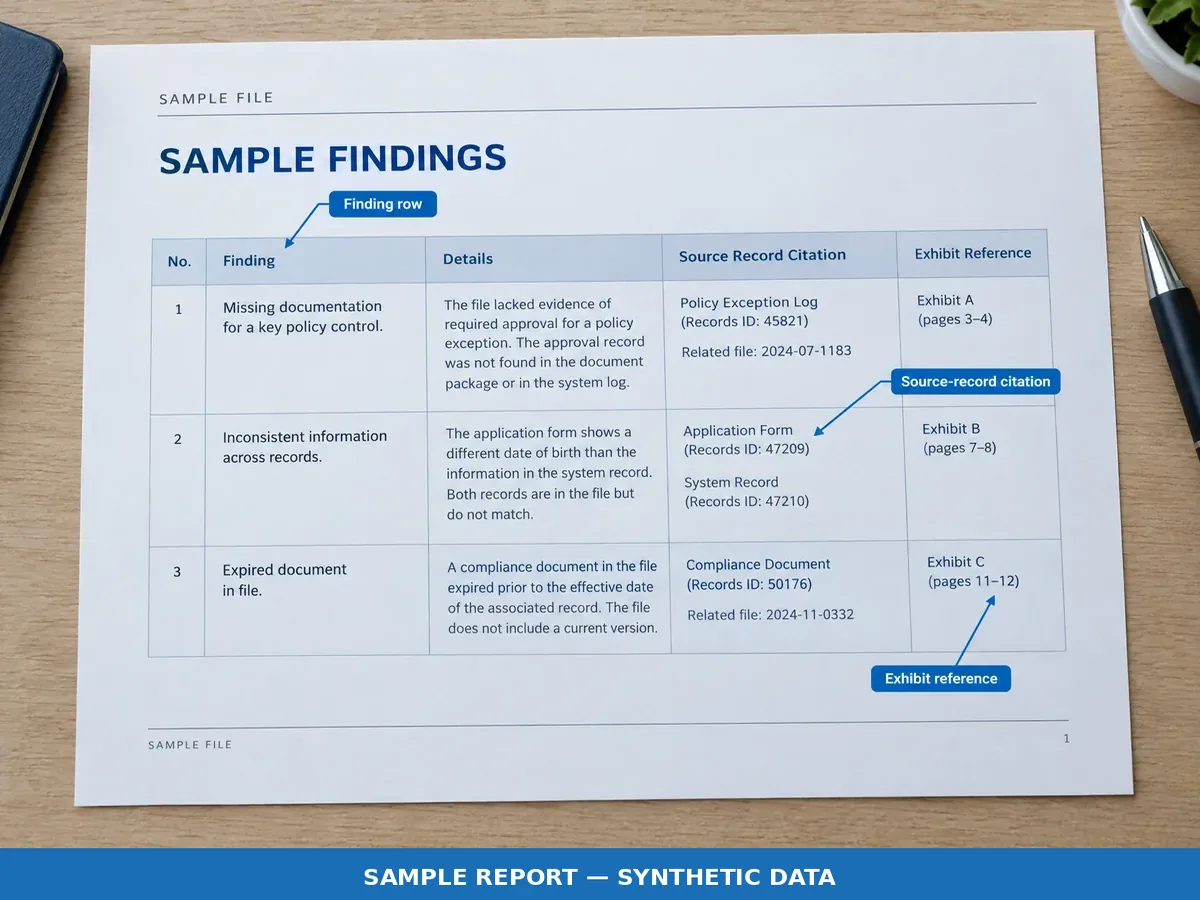
Documentation errors are common in mortgage lending. Some are clerical. Others reflect how a loan file was handled as it passed between originators, servicers and trusts. Our job is to find those errors and document them against the source records, with exhibits.
Common Findings in Mortgage Loan Audits
These are the categories of issue that come up most often in a mortgage file review. Whether any of them appears in your loan, and what it would mean, depends entirely on your documents:
- Gaps in the assignment chain: recorded transfers that are missing, out of sequence, or inconsistent with the endorsements on the note.
- Disclosure discrepancies: differences between what Regulation Z and Regulation X require to be disclosed and what the closing documents show for rates, fees, or yield spread premiums.
- Transfer timing questions: recorded assignment dates that fall outside the cutoff date stated in the trust’s own Pooling and Servicing Agreement.
- Dual tracking indicators: records showing foreclosure activity running alongside an active loss-mitigation application, which Regulation X restricts.
- Underwriting documentation gaps: missing or inconsistent income, asset, or ability-to-repay documentation in the origination file.
The Rules a Mortgage File Is Measured Against
A forensic audit is not a search for anything that looks unusual. It is a comparison of your documents against specific, published requirements. These are the main ones:
- The Truth in Lending Act (TILA), implemented through Regulation Z. Governs how credit terms, the finance charge, and the annual percentage rate must be disclosed. Sets tolerances for how far a disclosed figure may differ from the actual one.
- The Real Estate Settlement Procedures Act (RESPA), implemented through Regulation X. Covers settlement cost disclosure, escrow account administration, servicing transfer notices, error resolution, and the loss-mitigation procedures that restrict dual tracking.
- The Home Ownership and Equity Protection Act (HOEPA). Applies additional requirements to higher-cost mortgages, including specific disclosures and restrictions on certain terms.
- The Fair Debt Collection Practices Act (FDCPA). Relevant where a servicer acquired the loan while it was already in default, which changes how it may communicate about the debt.
- The Fair Credit Reporting Act (FCRA). Governs how payment history is furnished to credit bureaus and how disputes must be investigated.
- State recording and foreclosure statutes. Requirements for recording assignments and the procedural steps a foreclosure must follow vary substantially between judicial and non-judicial states.
We document what your records show measured against these requirements. We do not render an opinion on whether a violation occurred — that is a legal conclusion, and we are not attorneys.
The Three Phases We Review
Origination — what happened at and before closing
The loan application, the initial and final disclosures, the settlement statement, the note, and the security instrument. We reconcile the figures across documents, check the disclosure timing against what the rules require, and note where the underwriting file is incomplete. This is where fee discrepancies, undisclosed yield spread premiums, and ability-to-repay documentation gaps surface.
Servicing — what has happened since
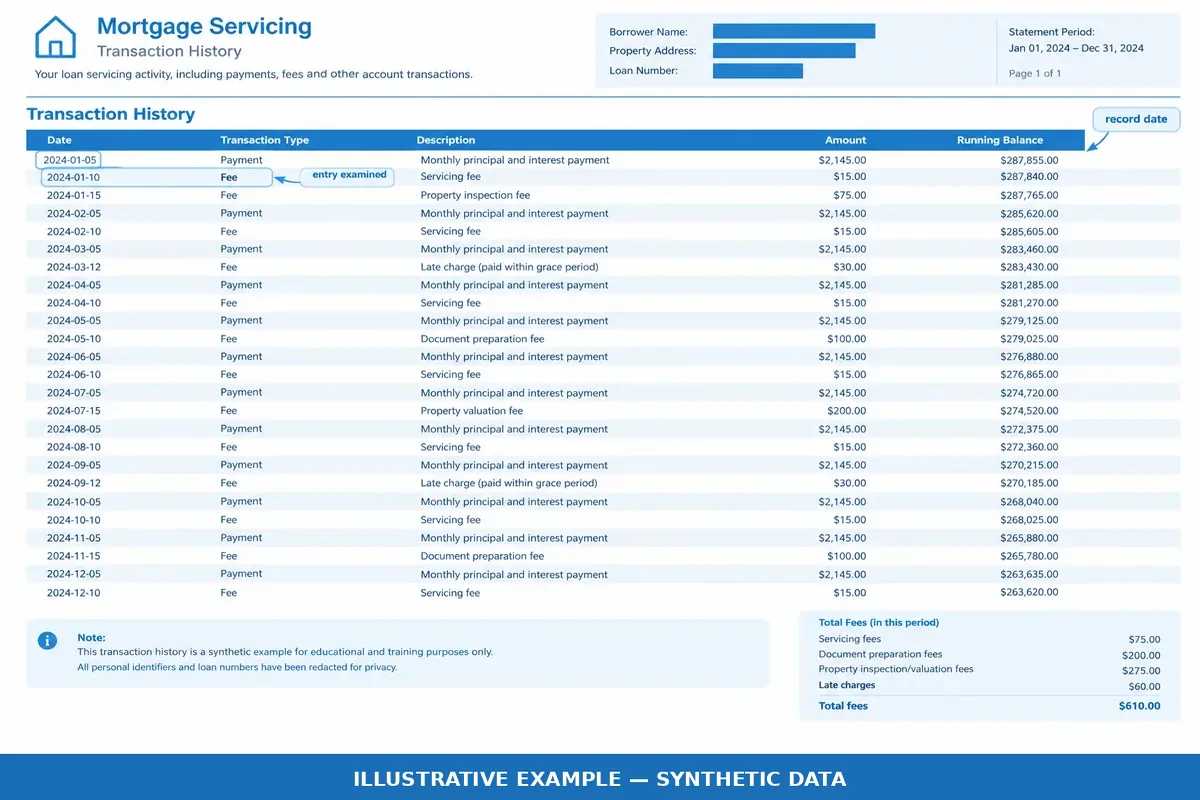
The payment history, escrow analyses, fee assessments, servicing transfer notices, and any correspondence about errors or loss mitigation. We rebuild the payment record from the servicer’s own data and identify misapplied payments, fees assessed without a documented basis, escrow shortages that do not reconcile, and forced-placed insurance charges.
Transfer — where the loan went
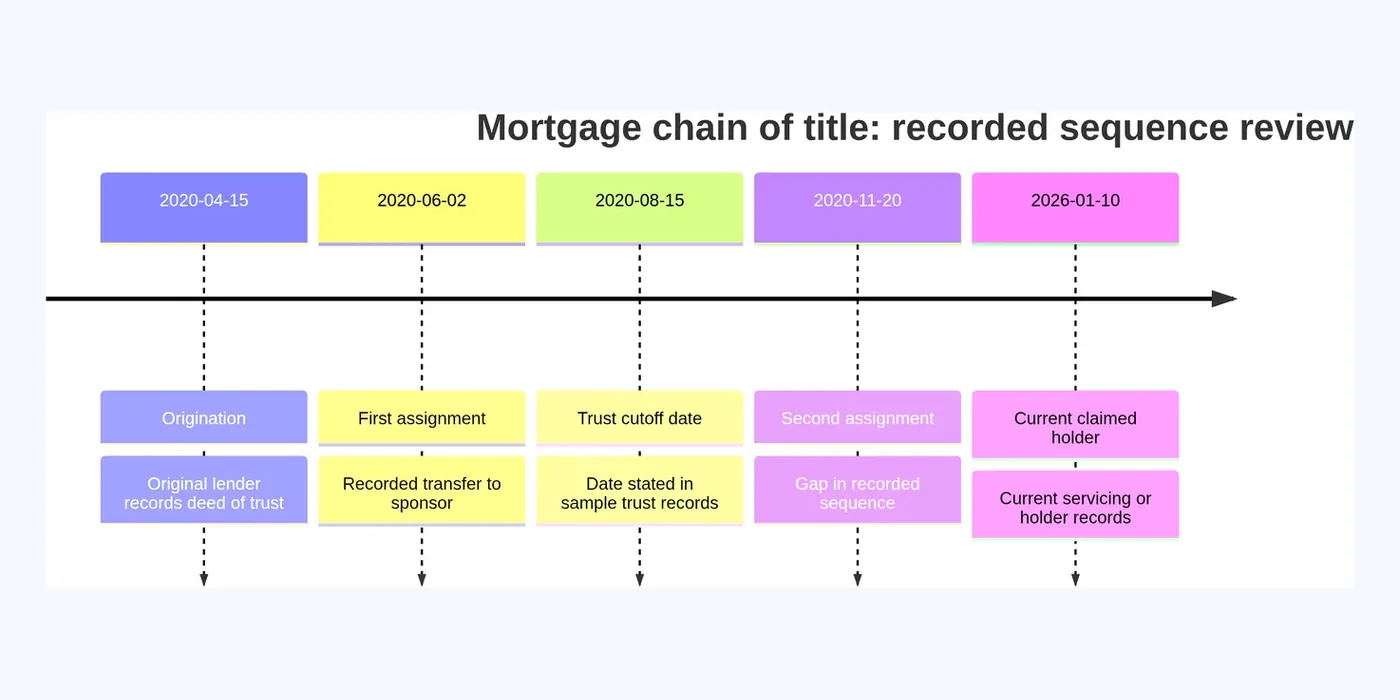
Recorded assignments, note endorsements and allonges, MERS registration, and trust documents where the loan was securitized. We build a dated sequence of every documented transfer and flag gaps, out-of-order recordings, and inconsistencies between the public record and the servicer’s account of ownership.
How an Audit Can Help You
The purpose of the report is to give you and your attorney an organized, sourced picture of the loan file. What that is worth depends on your circumstances, but attorneys commonly use this kind of documentation to:
- Understand what the record actually establishes about ownership before deciding how to proceed.
- Prepare for a loss-mitigation discussion with the complete servicing and payment history already assembled.
- Evaluate whether the documented chain of transfers supports the claim being made.
- Assess whether any documented discrepancy warrants further legal review.
The SDAudit Difference
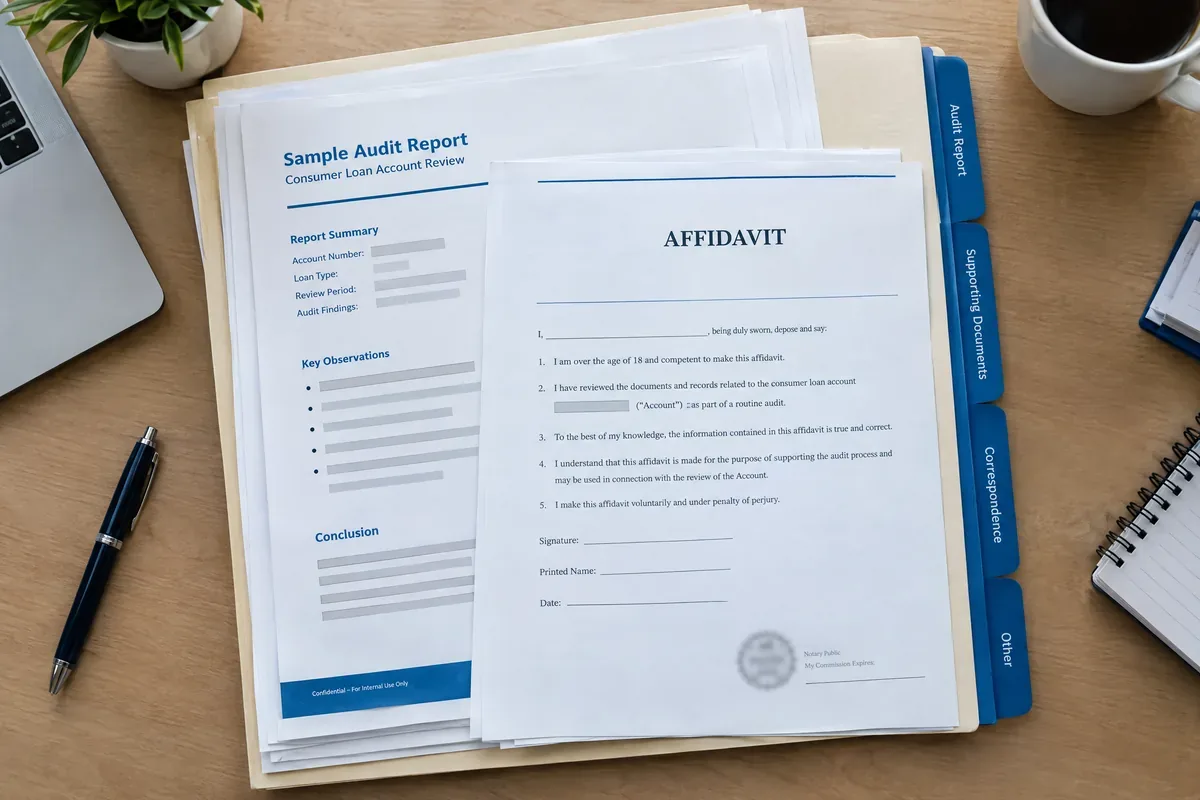
We are not a loan modification company or a law firm. We are independent, objective auditors who specialize in finding the technical errors that others miss. We trace the loan through public filings, county records and the servicing file, and document what each source shows. Our reports are detailed and factual, and every finding is tied to the document it came from.
If you want to know exactly what your own loan file contains, contact Secure Defense Audit at 888-450-4221 for a free consultation about which review fits your documents.
What You Receive
A written PDF report. The mortgage securitization package runs ten to fifteen pages; the legal-grade package adds a full exhibit packet with a notarized examiner affidavit. Every version includes:
- A statement of which documents were reviewed and which were unavailable.
- A reconciliation of the origination figures across the disclosure documents.
- A servicing and payment analysis built from the records supplied.
- A dated chain-of-transfer table with the source document cited for each entry.
- A findings section, each item tied to the specific page and record it came from.
- A scope and limitations statement describing what the report does not establish.
Current turnaround and package contents are listed on the pricing page. Nothing is quoted by phone that is not published there.
Who This Review Suits — and Who It Does Not
It tends to be useful if: you are working with an attorney and want the loan file assembled before you start paying hourly; you have received conflicting information about who owns your loan; your payment history does not reconcile with what you believe you have paid; you were charged fees you cannot find a basis for; or you simply want to know what your own file contains.
It is probably not what you need if: you are looking for a company to negotiate a modification on your behalf — we do not do that and, under the FTC’s Mortgage Assistance Relief Services Rule, firms that do may not charge advance fees; you want someone to tell you whether you have a case, which requires an attorney; or you are hoping an audit alone will resolve a foreclosure, which it will not.
We would rather tell you this review is not the right fit than sell it to you anyway.
Questions Borrowers Ask
How is this different from a free loan review my servicer offers?
A servicer’s review is conducted by the party whose records are being examined. This is an independent review of those same records, conducted for you, with the sources cited so you can verify each finding yourself.
Do I need to supply documents, or can you get them?
Public records — recorded assignments, SEC filings, MERS registration — we obtain ourselves. Your closing package and servicing history come from you or from a written request to your servicer. Our document checklist covers what to collect.
What if my loan was never securitized?
Plenty were not, particularly portfolio loans held by smaller institutions. The origination and servicing review still applies in full; the transfer analysis is simply shorter.
Will you tell me whether I have a case?
No. We report what the documents show. Whether that amounts to a claim is a legal judgment that belongs with a licensed attorney in your state.
How far back can you go?
As far as the records exist. County recordings and SEC filings are durable. Servicing records depend on what the current servicer received from prior ones, which is itself sometimes a finding.
Sources We Work From
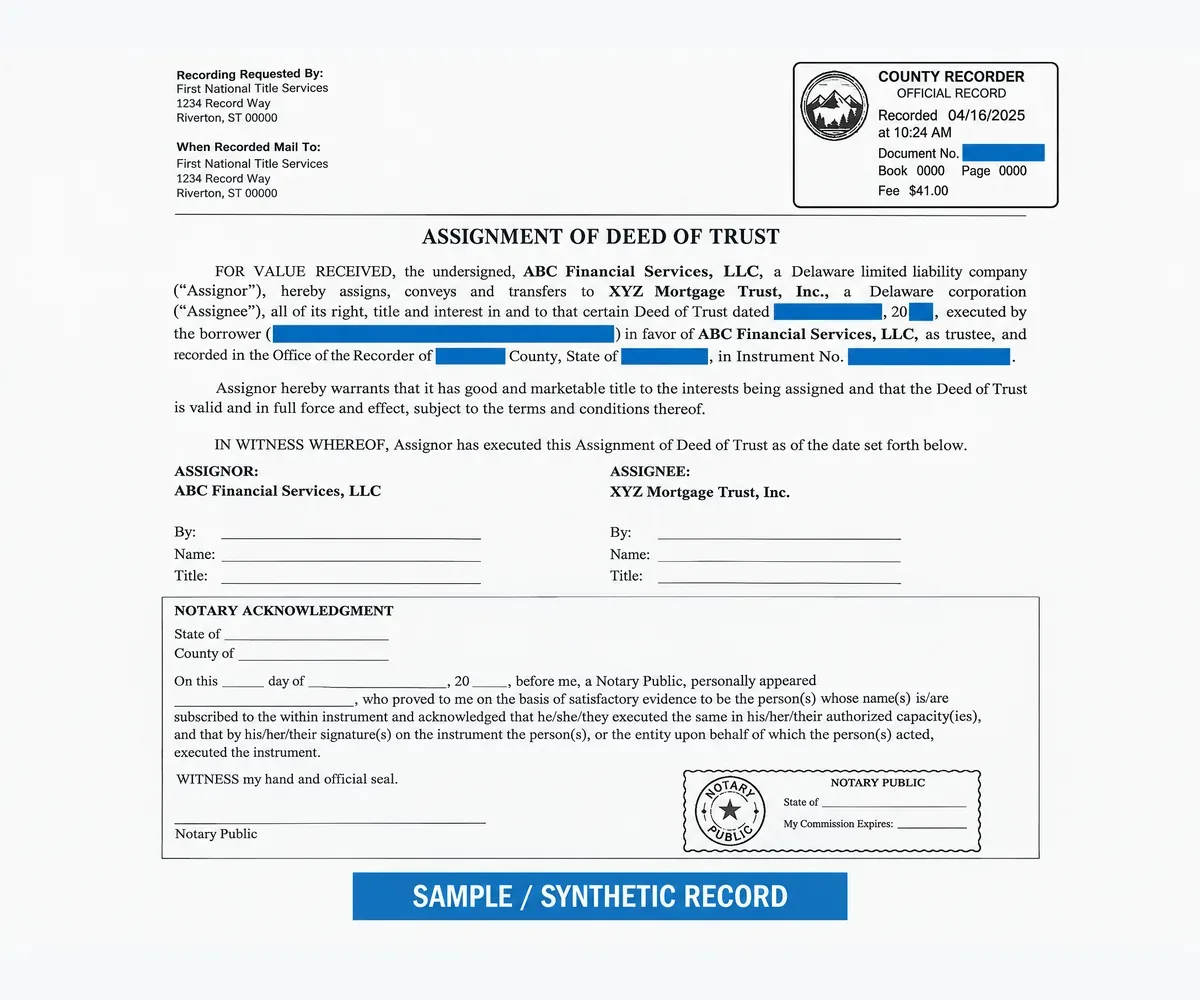
Every finding in an SDAudit report is tied to a record you can look up yourself. Trust identity, cutoff dates and pooling and servicing agreements come from the SEC’s EDGAR filing database. Assignment and recording history comes from county recorder records and the publicly searchable MERS Servicer ID lookup. Servicing, disclosure and dispute obligations are set out in Regulation X and Regulation Z, and perfection of security interests is governed by UCC Article 9.
Before You Hire Anyone
Loan auditing is a field with a real history of bad actors. The Federal Trade Commission has warned consumers about firms that sell forensic loan audits as a guaranteed route out of foreclosure, and the Consumer Financial Protection Bureau has brought enforcement actions against companies that did so while charging illegal advance fees. Read both before you pay anyone in this industry, including us.
What we sell: a document review at a published flat rate, delivered on a stated timeline, with each finding tied to its source record. What we do not sell: legal advice, legal representation, foreclosure relief, loan modification, or any promise about the outcome of a dispute. Those conversations belong with a licensed attorney in your state.