Securitization Audit Services
During the housing boom, millions of mortgages were bundled together and sold to Wall Street investors as Mortgage-Backed Securities (MBS). The process of transferring these loans into trusts is governed by strict rules known as a Pooling and Servicing Agreement (PSA). Where those rules were not followed, questions can arise about whether the transfer into the trust was completed as the governing documents required.
At Secure Defense Audit, our securitization audit traces the documented history of your loan and lays out, record by record, what the available filings show about how ownership was transferred. We report what the documents say. What that means legally is a question for your attorney.
What a Securitization Audit Is — and What It Is Not
Before anything else, it is worth being precise about what you are buying, because this is an industry where that has not always been made clear.
A securitization audit is a document review. We locate the public and borrower-supplied records connected to your loan, place them in order, compare them against one another, and write up what they show. Every finding in the report points back to a specific document you can pull up and read yourself.
It is not a legal opinion. We are not attorneys, we do not practice law, and nothing in an SDAudit report tells you whether you have a claim, a defense, or a case. Those are judgments only a licensed attorney in your state can make, and they depend on facts well beyond the four corners of your loan file.
It is not a foreclosure-stopping product. No audit, from us or anyone else, stops a foreclosure by itself. Any company that tells you otherwise is describing something the Federal Trade Commission has specifically warned consumers about.
What an audit does give you is an organized, sourced picture of your own loan — the kind of thing that makes a conversation with an attorney shorter, cheaper, and more productive, because you arrive with the records already assembled instead of paying someone by the hour to gather them.
How a Loan Actually Moves Into a Trust
Most borrowers picture a mortgage as an agreement between two parties: you and the bank whose name was on the paperwork at closing. For a securitized loan, that picture stopped being accurate within days of your signing.
The loan typically moves through four hands before it reaches its final home:
- The originator makes the loan and, in most cases, sells it almost immediately. The company you signed with often never intended to hold the debt.
- The sponsor buys loans in volume and assembles them into a pool with hundreds or thousands of similar mortgages.
- The depositor exists largely as a legal intermediary. Its role is to take the pool from the sponsor and convey it into the trust, creating a separation that matters for tax and bankruptcy purposes.
- The trust — usually structured as a REMIC — holds the pooled loans. Investors buy certificates entitling them to slices of the payment stream.
Running alongside all of this is the servicer: the company that actually sends your statements, takes your payments, and contacts you if you fall behind. The servicer is usually not the owner of your loan. It is performing a contracted function on the trust’s behalf.
Each of those transfers is supposed to leave a documentary trail — an assignment, an endorsement, a recording at the county, an entry in the trust’s schedule of loans. A securitization audit follows that trail and reports where it is complete and where it is not.
The paperwork mattered less to the parties involved than the speed of the transaction, and in the years when volume was highest, documentation practices varied widely from one institution to the next. That variance is the reason this kind of review exists.
What We Look For in a Securitization Audit
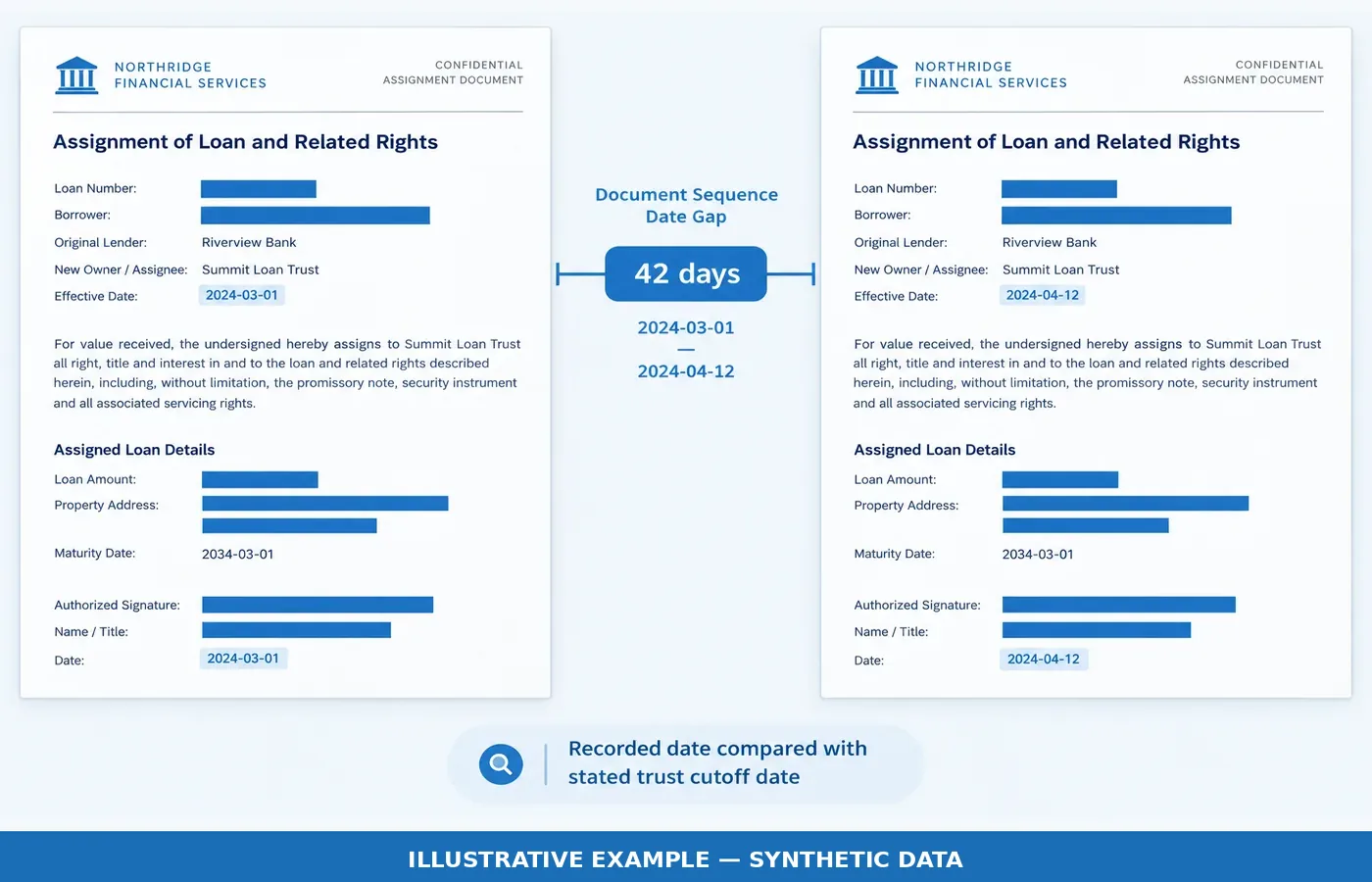
A securitization audit is a technical review of the paper trail behind your mortgage. We focus on what the records show about how the loan was handled after you signed your closing documents, and where the documented sequence is incomplete or inconsistent.
- Chain of Title Verification: We track each recorded assignment of the mortgage or deed of trust and identify gaps, out-of-sequence recordings, or transfers that appear in one record but not another.
- Note Endorsements: The promissory note must be properly endorsed (signed over) to each subsequent owner. We document blank endorsements, missing allonges, and endorsements that do not match the transfer sequence shown elsewhere in the file.
- PSA Compliance: The trust that supposedly holds your loan has a strict cutoff date. We compare the dates on your recorded assignments against the cutoff date stated in the trust’s own governing documents and report any discrepancy.
- Robo-Signing Detection: We compare signatures and signing titles on your assignments and affidavits against publicly documented signing patterns—individuals who signed thousands of documents without verifying their accuracy.
Why Securitization Matters
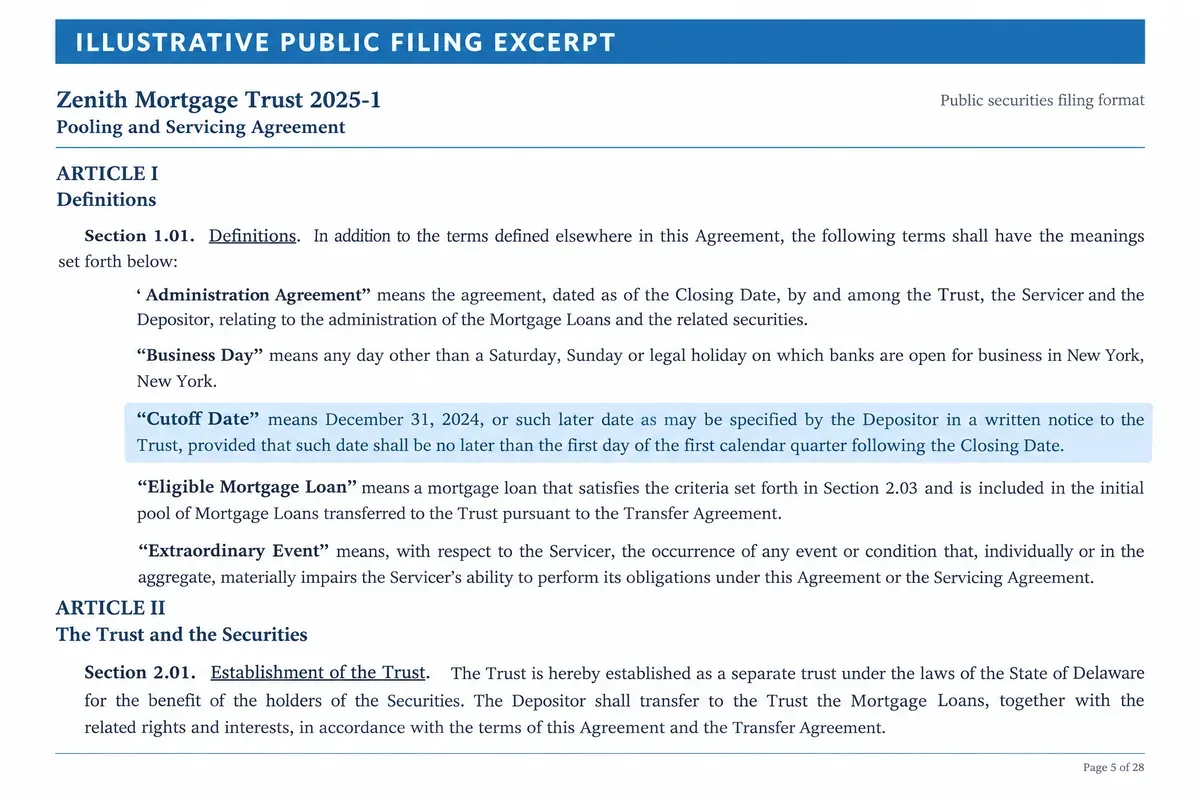
If your loan was securitized, your original lender likely sold it within days of closing. The company currently sending you statements is just a servicer—a debt collector acting on behalf of the trust. Where the records do not show a completed transfer into the trust, that is a documented gap worth raising with counsel — not a conclusion we draw for you.
Our report sets out what each record shows, where the documented sequence is incomplete, and which source every finding came from. Whether any of it matters in your situation depends on your facts, your state’s law, and the advice of a licensed attorney.
The Records We Trace
An audit is only as good as the records behind it. These are the sources we work through on a mortgage securitization review, and what each one is capable of showing.
- The promissory note and any allonges. The note is the debt itself. Endorsements on the note or on attached allonges are supposed to show each transfer of ownership. We document what endorsements exist, whether they are in blank or to a specific party, and whether the sequence matches the assignments recorded elsewhere.
- The deed of trust or mortgage. The instrument securing the debt against the property. We check how the original parties are identified, whether MERS appears as nominee, and what the document itself says about transfer.
- Recorded assignments. Filed with the county recorder, these are the public record of transfer. We pull the recording dates, the assignor and assignee named on each, the signing officers, and the notary blocks — then compare that sequence against everything else in the file.
- The Pooling and Servicing Agreement. Filed publicly with the SEC for most trusts. The PSA defines the trust’s cutoff date, the closing date, the required delivery process for loan documents, and what was supposed to happen when a loan failed to conform. This is the rulebook the transfer was meant to follow.
- SEC filings for the trust. Prospectuses, 424B5 filings, and annual servicing reports. These establish the trust’s identity, its dates, and which loans it claimed to hold.
- MERS records. Where a loan is registered on the MERS System, the Servicer ID lookup shows the servicer and, in many cases, the investor of record. That can be compared against what the county records and the trust documents say.
- The servicing and payment history. Supplied by you or obtained from your servicer. Shows payment application, fee assessments, escrow handling, and any transfers of servicing rights.
- Your closing package. The disclosures, the settlement statement, and the loan estimate. Relevant to origination-side review rather than securitization, but often illuminating when read alongside the transfer record.
What the Finished Report Contains
The deliverable is a written PDF. Depending on the package you choose, it runs from ten to fifteen pages for a standard mortgage securitization audit, or a full exhibit packet for the legal-grade tier. Every version contains the same core structure:
- A loan identification section establishing which loan was reviewed and which documents were available.
- A securitization finding identifying the trust, where it was located in public filings, its cutoff and closing dates, and the CUSIP where one could be determined.
- A chain-of-title table listing each transfer in date order, with the source document for each.
- A findings section describing each documented gap, inconsistency, or discrepancy, with a citation to the record it came from.
- An exhibit index pointing to the supporting documents, which are included in the legal-grade packages.
- A statement of scope and limitations setting out what was reviewed, what was unavailable, and what the report does not purport to establish.
That last section is not boilerplate. If a document could not be obtained, or a record was ambiguous, the report says so. A finding that overstates what the paperwork shows is worse than no finding at all, because it will not survive the first serious question from opposing counsel.
Which Loans Can Be Reviewed This Way
Securitization is not limited to mortgages, though mortgages are where the documentation requirements are most formal and the public record is deepest.
- Mortgages and deeds of trust — the deepest available record, because assignments are recorded publicly at the county and most trusts file with the SEC.
- Auto loans — frequently pooled into asset-backed securities. Perfection of the security interest runs through UCC filings and title records rather than county recordings.
- Private student loans — commonly securitized, and often transferred repeatedly. Federal student loans work differently and are generally not reviewed this way.
- Credit card receivables — typically sold in portfolios rather than individually, which changes what a chain-of-ownership review can establish.
- Personal and consumer installment loans — varies considerably by originator.
Whether a securitization audit is the right review for your situation depends on the loan type and on what you are actually trying to find out. If you are unsure, a general loan audit may fit better, and the pricing page sets out what each package covers.
What to Gather Before You Order
The audit is faster and more complete when you supply the loan file. You do not need everything to start, but the more you have, the further the review can go.
- Your closing package, including the note and the deed of trust or mortgage.
- Any assignment documents you have received in the mail or found in your county records.
- Your most recent mortgage statement, showing the current servicer.
- Any notice of servicing transfer you have received.
- Your payment history, if your servicer provides one online.
- Any correspondence about the loan’s ownership, including responses to prior written requests.
If you are missing documents, start by submitting a written Request for Information to your servicer. Regulation X sets out that process for mortgage loans, and the CFPB explains it in plain language. Our document checklist walks through what to collect and where each item usually comes from.
Questions Borrowers Ask
Will a securitization audit stop my foreclosure?
No. An audit is a document review. It produces information; it does not produce a legal outcome. Anyone promising otherwise is making a claim the FTC has specifically warned consumers about.
Do I need to be in foreclosure to order one?
No. Some clients order an audit while current on payments, simply because they want to know who holds their loan and whether the record supports it.
How long does it take?
A standard mortgage securitization audit runs five to nine business days. The legal-grade packet runs seven to ten. Timing depends on how complete the documents you supply are. Current turnaround by package is listed on the pricing page.
What if you find nothing?
That is a real possible outcome and we will tell you plainly. A clean chain of title is a finding too. We do not manufacture issues to justify the fee, and a report that invents problems would be worthless the moment an attorney read it.
Can I use the report in court?
That is entirely a question for your attorney. The legal-grade packages include exhibits and an examiner declaration because attorneys have asked for them, but whether any document is admissible or useful in a specific proceeding depends on the facts, the jurisdiction, and the rules of evidence.
Do you work outside California?
Yes. The records we work from — SEC filings, MERS, county recordings — are accessible nationwide, and we review loans in all fifty states.
Get the Facts About Your Loan
Securitization is complex by design, and most borrowers never see the records behind it. Secure Defense Audit locates and organizes those records so you can read them. If you have questions about how your loan was handled during securitization, call 888-450-4221 to discuss what an audit would and would not cover in your situation.
Sources We Work From
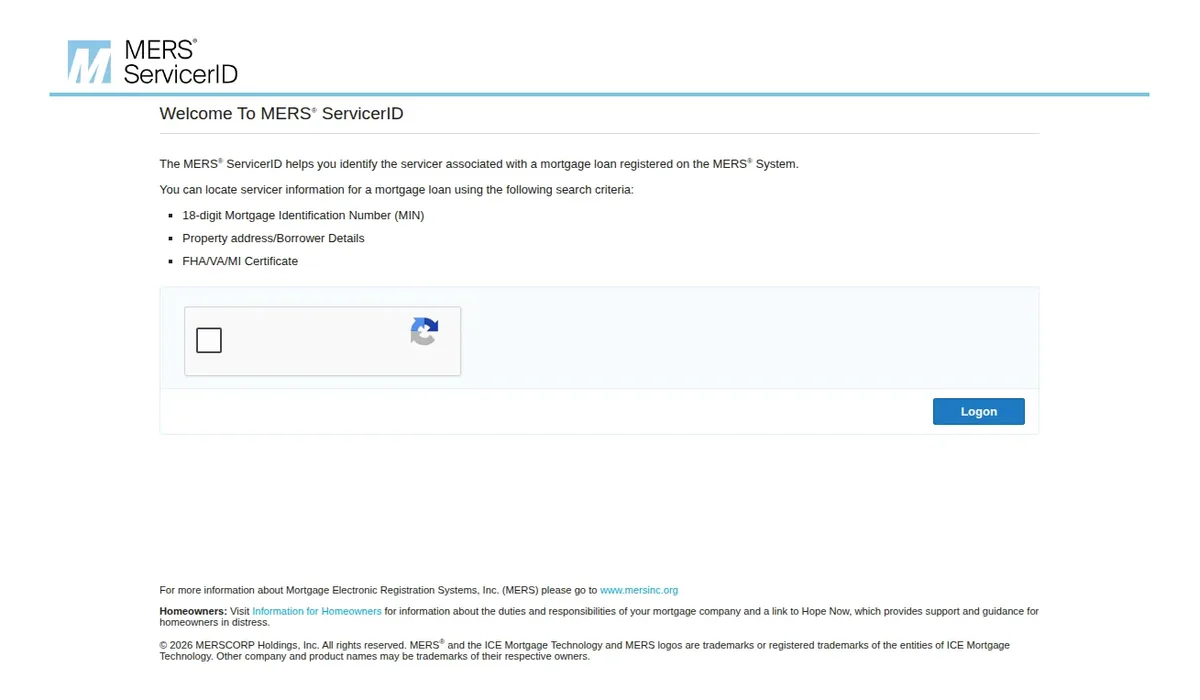
Every finding in an SDAudit report is tied to a record you can look up yourself. Trust identity, cutoff dates and pooling and servicing agreements come from the SEC’s EDGAR filing database. Assignment and recording history comes from county recorder records and the publicly searchable MERS Servicer ID lookup. Servicing, disclosure and dispute obligations are set out in Regulation X and Regulation Z, and perfection of security interests is governed by UCC Article 9.
Before You Hire Anyone
Loan auditing is a field with a real history of bad actors. The Federal Trade Commission has warned consumers about firms that sell forensic loan audits as a guaranteed route out of foreclosure, and the Consumer Financial Protection Bureau has brought enforcement actions against companies that did so while charging illegal advance fees. Read both before you pay anyone in this industry, including us.
What we sell: a document review at a published flat rate, delivered on a stated timeline, with each finding tied to its source record. What we do not sell: legal advice, legal representation, foreclosure relief, loan modification, or any promise about the outcome of a dispute. Those conversations belong with a licensed attorney in your state.