The world of mortgage lending is more complicated than most people realize. When you close a loan, the company across the table is rarely the final owner of that debt. Mortgages are frequently bundled together, packaged into trusts, and sold to investors as mortgage-backed securities. That process is called securitization, and it creates a chain of documents and transfers that must be done precisely. When those steps are skipped or handled incorrectly, homeowners can face improper foreclosure attempts or inaccurate billing. That is where a forensic securitization audit pro is invaluable.
What is a forensic securitization audit pro?
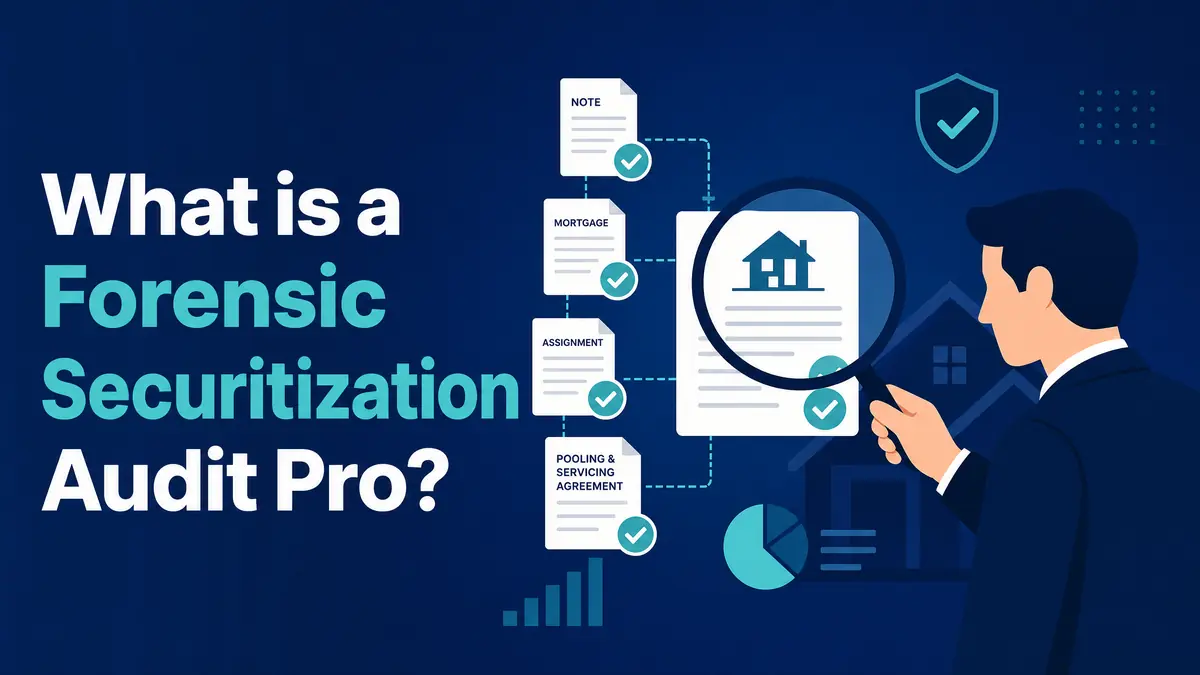
A forensic securitization audit pro is an auditor with experience reconstructing the ownership and servicing history of a loan. The professional examines original paperwork, transfer instruments, servicing records, and trust documents to determine who actually has the legal right to enforce the loan. This work combines legal knowledge, document forensics, and a practical understanding of how securitization trusts operate.
Why this matters
If a servicer cannot prove a clear chain of title from the original lender through each transfer into a securitization trust, the servicer may lack standing to collect payments or to foreclose. Problems from the housing boom era, such as missing endorsements, improperly dated assignments, and incorrect trust cutoff compliance, have left many loans with defective chains of ownership. A forensic audit identifies those defects and documents them in a way that can be used in negotiations or litigation.
Tracing the chain of title
Tracing the chain of title is one of the core tasks in a securitization audit. The auditor requests and reviews every transfer document involved in the loan history. This includes assignments of the deed of trust, endorsements on the promissory note, allonges, and servicer transfer records.
How securitization works in practice
When a loan is originated, the lender often keeps the promissory note but sells the right to receive payments. Loans are pooled into a trust. That trust is governed by a Pooling and Servicing Agreement (PSA). The PSA sets rules for which loans are included and specifies a cutoff date for transfers into the trust. Transfers after that cutoff date may not be valid for that trust.
Common chain of title problems and examples
- Missing endorsements: The note may lack the proper signature or a physical endorsement. Example: A homeowner is notified of foreclosure, but the servicer cannot produce the original note endorsed to the trust.
- Improperly dated assignments: An assignment recorded after the trust closed may purport to transfer the loan into the trust, but the PSA requires transfers before the cutoff date. Example: The assignment is dated two months after the trust cut-off, making the transfer potentially ineffective.
- Robo-signing and defective notary: Signatures on assignments may not be valid if they were signed without proper authority or notarization.
- MERS and lost transfers: The Mortgage Electronic Registration System often appears as a placeholder. If the chain relies on MERS entries without supporting assignments, ownership may be unclear.
Beyond securitization: reviewing original loan documents
While proving ownership is central, a thorough forensic audit also looks at the original closing documents and servicing practices. Auditors analyze the promissory note, deed of trust, Truth in Lending Act disclosures, Real Estate Settlement Procedures Act disclosures, the HUD-1 or Closing Disclosure, and periodic statements.
Understanding TILA and RESPA issues
TILA requires accurate disclosure of the Annual Percentage Rate and finance charges. If those amounts were disclosed incorrectly at closing, borrowers may have grounds for relief. RESPA governs closing practices and prohibits certain kickbacks and undisclosed fees. A forensic review checks those disclosures and fees for compliance.
Servicing practices and accounting errors
Audit professionals also examine servicer payment histories, escrow accounting, and fee postings. Common issues include double fees, improper late fees, misapplied payments, or failure to credit payments promptly. Servicing errors can compound a securitization problem and provide additional remedies for borrowers.
Step-by-step: what a forensic securitization audit entails
Below is a typical process an auditor follows when performing a securitization audit.
- Document request: The auditor requests the note, deed of trust, all assignments, the Pooling and Servicing Agreement, and the servicer’s loss mitigation and payment history.
- Verification of endorsements and allonges: The team verifies whether the note is endorsed in blank, endorsed to the trust, or has an allonge attached.
- Compare dates to PSA cutoff: The auditor checks each transfer date against the trust cutoff dates specified in the PSA.
- Chain reconstruction: Every transfer is examined to create a chronological chain of custody for the note and mortgage rights.
- Legal and regulatory review: The auditor reviews closing disclosures and servicing records for TILA and RESPA violations.
- Report and recommendations: The auditor prepares a detailed report outlining defects, practical implications, and recommended next steps.
Practical advice for homeowners
If you suspect problems with your loan, there are practical steps you can take before or while arranging an audit.
Document checklist
- Promissory note
- Deed of trust or mortgage
- Closing disclosures or HUD-1
- Monthly mortgage statements
- Any assignments or recorded documents from the county recorder
- Correspondence from the servicer, including default notices
Initial steps
- Request a copy of the promissory note and recorded assignments from your servicer in writing.
- Ask the servicer to produce documentation proving they have authority to collect or foreclose.
- Keep records of all payments, including checks and bank statements.
- Consider hiring a forensic securitization auditor if the servicer cannot produce clear evidence of ownership.
Possible outcomes and remedies
A forensic audit can lead to several outcomes depending on the findings. Where the documented transfer record is incomplete, that is a fact an attorney may want to raise. Whether it carries any weight depends on the jurisdiction, the procedural posture, and the law — questions for counsel, not for an auditor. A review may likewise document discrepancies measured against Regulation Z or Regulation X requirements. What follows from that, if anything, is a legal judgment. In other cases, the audit confirms valid ownership but identifies servicing errors that can be corrected or compensated.
Why choose SDAudit
SDAudit specializes in mortgage document forensics and securitization audits in San Diego and the surrounding region. Our team combines legal knowledge and practical auditing skills to reconstruct loan histories and produce reports that can be used with attorneys, negotiators, or in court. We focus on clear documentation, thorough analysis, and practical recommendations tailored to each homeowner’s situation.
If you are facing a foreclosure, believe your loan was improperly transferred, or simply want certainty about who owns your mortgage, contact SDAudit. We offer a free consultation to review your documents and explain your options. Let us help you understand the facts and move forward with confidence.
Contact SDAudit today for a free consultation and expert securitization audit services.